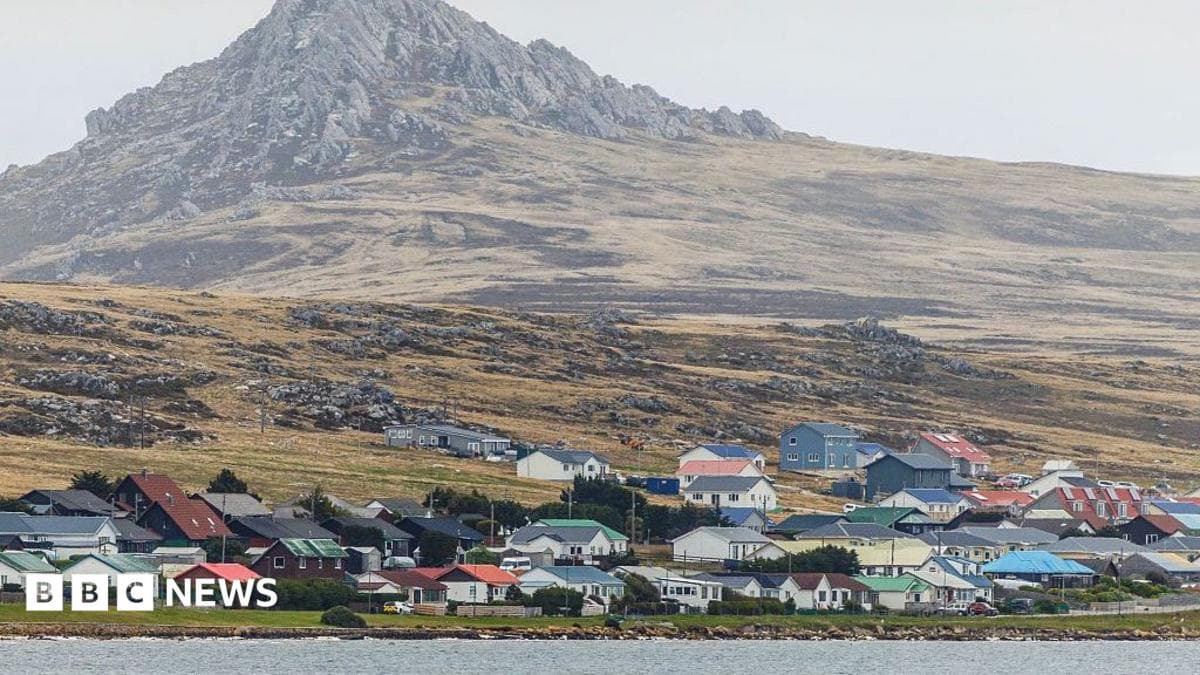
Argentina fails to block oil drilling off Falkland Islands
UK government calls on Buenos Aires to end ‘economic pressure’ on islands after international tribunal’s ruling The UK has called on Argentina to stop its economic warfare on the Falkland islands after Buenos Aires failed in a legal attempt to terminate an offshore oil project…
Noticia publicada originalmente por The Guardian — World en theguardian.com (se abre en una pestaña nueva). Minuto 24 no es autor de este contenido.
Claves de la noticia
- El tribunal internacional del derecho del mar (Itlos) rechazó la solicitud de Argentina para suspender el proyecto petrolero Sea Lion frente a las islas Malvinas, por considerar que la cuestión escapa a su competencia.
- Según el presidente del tribunal, Maurice Kamga, 18 jueces votaron contra las pretensiones argentinas y tres a favor.
- Londres pidió a Argentina que respete el derecho de los isleños a decidir su futuro y que ponga fin a sus presiones económicas contra el archipiélago.
- El gobierno de Javier Milei calificó la decisión de no ser la última palabra y anunció nuevos procedimientos sancionadores contra cinco entidades.
- El proyecto, liderado por la empresa israelí Navitas y su socio británico Rockhopper, comenzará a perforar en marzo y extraerá petróleo desde 2028 durante 35 años.
Contexto
Las islas Malvinas, que Argentina reclama como suyas y llama Las Malvinas, son un territorio británico de ultramar en el Atlántico Sur, sobre el que ambos países libraron una guerra en 1982. La disputa sobre la soberanía sigue abierta y se extiende al terreno económico. Para las islas, el proyecto Sea Lion representa una vía para asegurar su financiación sin depender de subvenciones, mientras que Buenos Aires sostiene que la explotación de recursos en la zona es ilegítima. El fallo no resuelve el fondo del conflicto: un tribunal arbitral deberá pronunciarse sobre el asunto, pero esa decisión podría tardar años, cuando la extracción ya habría comenzado.
Resumen elaborado por Minuto 24 con ayuda de inteligencia artificial a partir de la noticia publicada por The Guardian — World. Puede contener imprecisiones: ante cualquier duda, consulta la fuente original.

The UK has called on Argentina to stop its economic warfare on the Falkland islands after Buenos Aires failed in a legal attempt to terminate an offshore oil project vital to the future of the British overseas territory.
An application by the South American country for suspension of the Sea Lion project was rejected on Saturday by the international tribunal for the law of the seas (Itlos) on the grounds that the issue lay outside its jurisdiction.
In a joint statement, Ed Miliband, the UK’s foreign secretary and Ellie Reeves, the attorney general for England and Wales, said: “Argentina sought to stop the Falkland Islanders making their own sovereign decisions and failed in this attempt.
“The UK has no doubt of our sovereignty of the Falkland Islands, our sovereignty and sovereign rights over the surrounding maritime areas, and the right of self-determination of the Falkland Islanders.
“We now call on Argentina to respect the right of the Falkland Islanders to determine their own future and urge Argentina to end its wider economic pressure against the Falkland Islands.”
The ruling from Itlos is a significant blow to Argentina’s president, Javier Milei, who has described reclaiming sovereignty of the Falkland islands, known in Argentina as Las Malvinas, as a “national cause”.
The Falklands has a prosperous economy but the Sea Lion oil project is said to offer the potential to double the islands’ GDP. It is seen by the Falkland Islands’ government as a vital way to secure its future as a self-financed British overseas territory.
Milei has previously said that blocking the drilling is part of a wider strategy to force the UK into talks over sovereignty over the archipelago, over which the two countries went to war in 1982 after an invasion by Argentinian forces.
In a decision read out on Saturday by the president of Itlos, Maurice Kamga, the tribunal rejected Argentina’s arguments for a suspension of the project, saying there did not appear to be any basis for believing it had jurisdiction as the tribunal was unable to rule on questions of sovereignty.
Kamga said 18 judges had voted to reject Argentina’s claims, while three had voted to uphold them. At a hearing earlier this month, Argentina said drilling should not be allowed until the issue of sovereignty over the islands had been resolved and asked Itlos to issue a temporary injunction until a full arbitration hearing could be held.
Mario Oyarzábal, the chief legal adviser to Argentina’s ministry of foreign affairs, had claimed that the oil money from the drilling would “finance the very military base and presence that sustains the UK’s de facto control of the territory”.
During the two-day hearing, Reeves said that such an order would have “devastating consequences” for the islanders and prevent them from developing their natural resources “as they are entitled to do so, pursuant to their fundamental right to self-determination”.
The Sea Lion project in the North Falkland basin, led by the Israeli company Navitas and its British partner, Rockhopper, will start drilling in March, and oil will be extracted from 2028 and continue for 35 years. It has the potential to double the islands’ GDP, with a cumulative uplift of £8bn over the lifetime of the project.
after newsletter promotion
Milei previously described the companies’ activities as unlawful and launched economic sanctions on people and firms involved in oil exploration around the islands.
An arbitration tribunal will now address the substance of the dispute, but its decision could take years, and by then oil exploitation will have already begun. The Argentinian government is pushing through legislation that would criminalise parties involved in the Falklands economy.
In a statement, a spokesperson for Milei claimed that the tribunal’s ruling was not the “final word” on the dispute, adding: “By history and by right: the Malvinas are Argentine.”
The spokesperson said: “The decision by the international tribunal for the law of the sea in no way legitimises the unilateral exploitation of our natural resources. The national government will continue to take all necessary actions to prevent such exploitation. In this regard, new sanction proceedings were initiated yesterday against five entities for violations of our current legal framework. The message is clear: those who participate in the illegitimate exploitation of our resources must face the consequences.
“The defence of our sovereignty is not the cause of any single government or political party; it is an inalienable constitutional mandate. Argentina will continue to assert its rights through all available diplomatic, legal, and administrative channels, with the firm conviction that no unilateral action by the United Kingdom can extinguish our legitimate sovereign rights.”
A spokesperson for Navitas said: “We welcome the tribunal’s decision to reject all of Argentina’s requests for provisional measures. Navitas remains focused on the continued responsible development of the Sea Lion project, pursuant to licences issued by the Falkland Islands government. We wish to extend our appreciation for the UK government’s continued and unwavering support for the Falkland Islands and the Sea Lion project.”