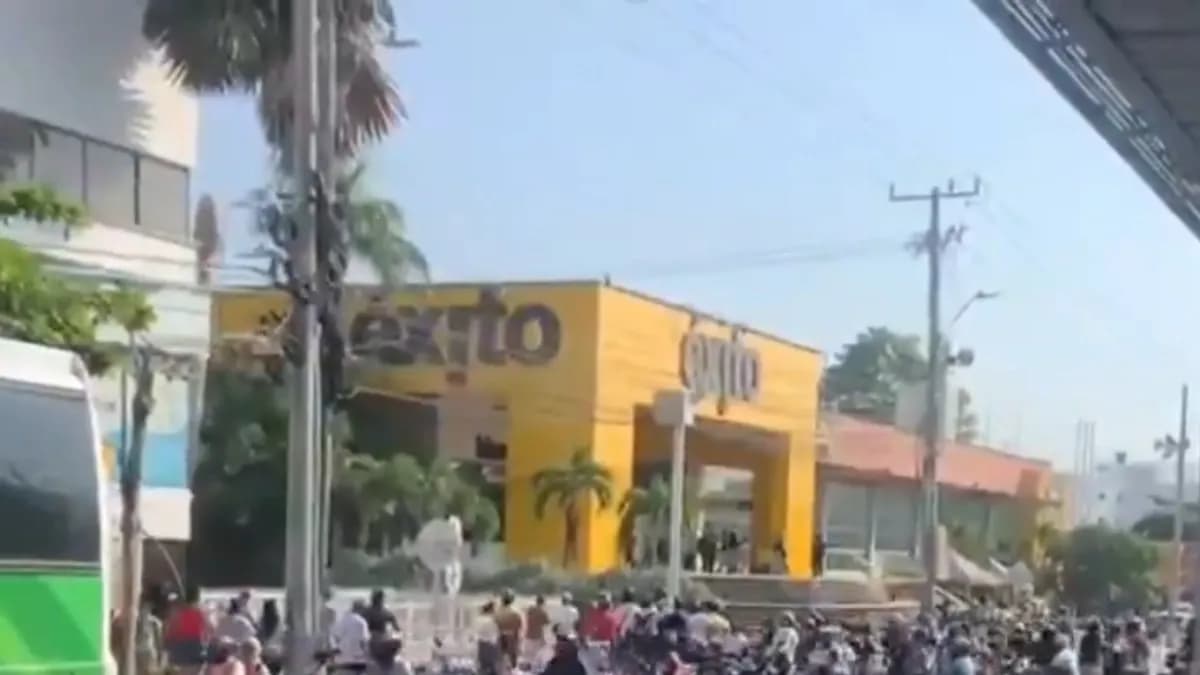
Car bomb tears through Colombian city wounding more than 20
The explosion is the latest in a string of attacks on buildings housing the security forces and government offices.
Noticia publicada originalmente por BBC News — World en bbc.co.uk (se abre en una pestaña nueva). Minuto 24 no es autor de este contenido.
Claves de la noticia
- Un coche bomba explotó en el centro de Villavicencio, en Colombia, dejando al menos 23 heridos y daños en varios edificios.
- El artefacto estalló frente a las oficinas del gobierno regional; hasta ahora ningún grupo se ha atribuido el ataque.
- El presidente Abelardo de la Espriella atribuyó el atentado al "narcoterrorismo" y prometió responder con firmeza.
- El ataque se produjo la víspera del décimo aniversario del acuerdo de paz con las antiguas Farc, en medio de una escalada de atentados de grupos armados.
Contexto
Colombia firmó en 2016 un acuerdo de paz entre el Gobierno y las Fuerzas Armadas Revolucionarias de Colombia (Farc), la mayor guerrilla del país, cuyos miembros dejaron las armas. Sin embargo, algunos excombatientes rechazaron el pacto y se unieron a disidencias que hoy compiten con bandas criminales por el narcotráfico, la minería ilegal y la extorsión. Según el artículo, los ataques con explosivos contra edificios oficiales y sedes de seguridad se han intensificado en las últimas semanas. El presidente De la Espriella, que criticó duramente el acuerdo y la estrategia de paz total de su predecesor, vincula la violencia con esos grupos. Expresidentes firmantes del pacto sostienen que el problema es su falta de implementación.
Resumen elaborado por Minuto 24 con ayuda de inteligencia artificial a partir de la noticia publicada por BBC News — World. Puede contener imprecisiones: ante cualquier duda, consulta la fuente original.
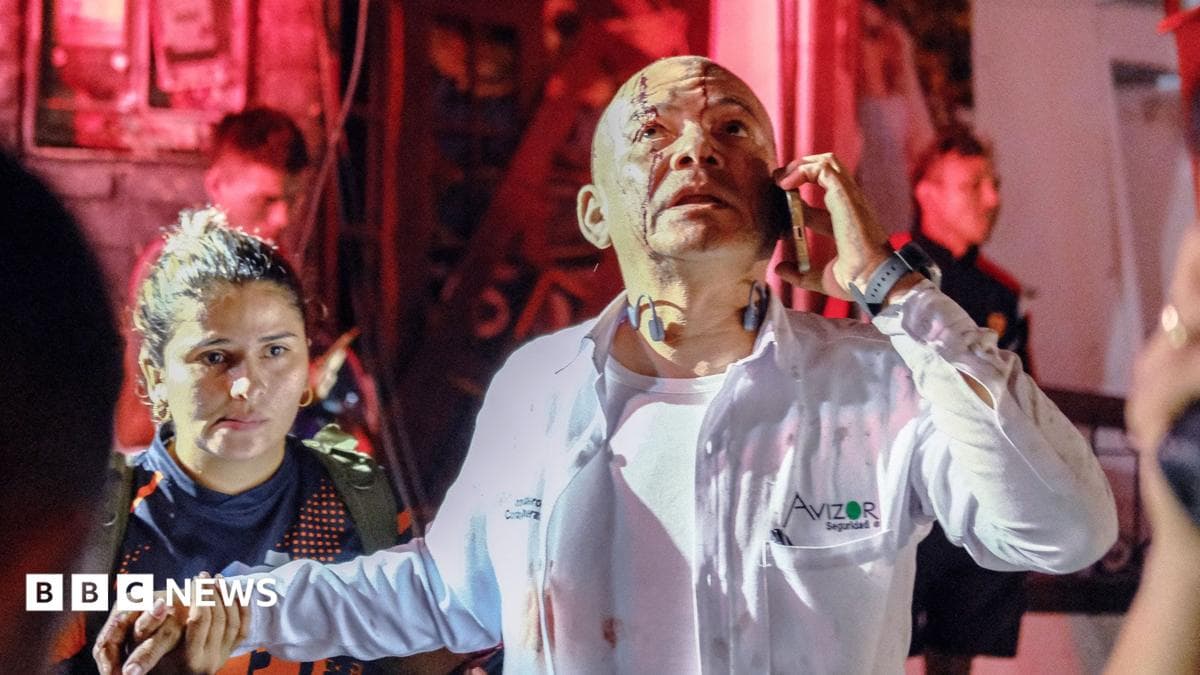
A car bomb has exploded in the central Colombian city of Villavicencio, injuring at least 23 people.
The explosive device was detonated in front of the offices of the regional government, in the city centre, damaging several buildings.
No group has so far admitted carrying out the attack - the latest in a series using explosives to target official buildings and security forces' headquarters.
Colombian President Abelardo de la Espriella blamed "narcoterrorism", but gave no details. Armed criminal groups have recently stepped up attacks in what appears to be retaliation for an offensive ordered against them by De la Espriella.
Writing on social media, the president said that his government would "bluntly and forcefully" respond, external to "every drop of Colombian blood spilled".
"There will be no impunity and no retreat," he added.
Three weeks ago, three adults and a baby were killed in a car bomb attack near army barracks in Tolima province.
And earlier on Monday, drones dropped explosives on the police headquarters in the northern city of Cúcuta.
The car bomb in Villavicencio went off on Monday evening - the eve of the 10th anniversary of the signing of a peace deal between the government and left-wing rebels of the Revolutionary Armed Forces of Colombia (Farc), Colombia's largest guerrilla group.
Following the signing of the deal, thousands of left-wing rebel fighters laid down their arms.
However, a significant number of Farc members, who did not agree with the deal, refused to disarm and joined dissident groups instead.
While forced displacement, child recruitment and the numbers of attacks on security forces dropped in the aftermath of the deal, there has been an upsurge in recent years driven by dissident Farc factions and criminal groups fighting for control of drug trafficking, illegal mining and extortion rackets.
Colombia's first left-wing president, who was in power from August 2022 to August 2026, tried to negotiate with these armed groups as part of what he called his "total peace" strategy.
However, the talks stalled and collapsed with several of the criminal groups violating ceasefires they had agreed to observe.
De la Espriella was elected on a promise to crack down on "narcoterrorism" and has been scathing about his predecessor's approach.
He has also been critical of the 2016 agreement, calling it a "false peace".
In a post on X, uploaded shortly before news of the car bomb in Villavicencio spread, he referred to the peace deal as a "mess", describing it as a "waste of public resources" and the "cause behind Colombia's ruin".
Former President Juan Manuel Santos and Rodrigo Londoño - the two men who signed the peace deal on behalf of the Colombian government and the Farc respectively - defended it in an interview with BBC Mundo ahead of the anniversary.
Santos said that De la Espriella was "totally wrong" to call it a "false peace".
"He wants to use, or has bought into that cynical and mistaken theory that the violence we see today is the result of the peace deal, when the exact opposite is the case," Santos said, arguing that the problem lies with the lack of implementation of the agreement.