Deal with EU not dependent on tuition fees agreement, Miliband says
Brussels sources had previously suggested the bloc might not apply the wider deal until fees were lowered for EU students in Britain.
Noticia publicada originalmente por BBC News — World en bbc.co.uk (se abre en una pestaña nueva). Minuto 24 no es autor de este contenido.
Claves de la noticia
- El ministro de Exteriores, Ed Miliband, afirmó a la BBC que el acuerdo con la Unión Europea entrará en vigor aunque no se alcance un pacto separado sobre las tasas universitarias de los estudiantes europeos.
- Lo acordado en Bruselas incluye eliminar la mayoría de los controles a las exportaciones británicas de alimentos, a cambio de que el Reino Unido siga algunas normas europeas desde 2028, y un nuevo programa de movilidad juvenil.
- La propuesta de la UE para reducir las tasas que pagan los estudiantes europeos en el Reino Unido no ha sido aprobada todavía.
- Según el primer ministro Andy Burnham, el Tesoro calcula que el acuerdo podría impulsar la economía británica hasta 17.000 millones de libras al año, cifra que la líder conservadora Kemi Badenoch cuestionó.
- Miliband descartó costes para el contribuyente británico y dijo que no habrá nuevas aportaciones al presupuesto de la UE, además de no descartar que se estudie volver a unirse al bloque.
Contexto
El Reino Unido abandonó la Unión Europea tras el referéndum de 2016, y desde entonces sus relaciones comerciales, migratorias y educativas con el bloque han sido objeto de negociación constante. Los acuerdos sobre alimentos, energía y movilidad juvenil buscan reducir trabas burocráticas y costes para empresas y consumidores, mientras que las tasas universitarias afectan directamente a estudiantes europeos que quieren estudiar en Gran Bretaña. Las reacciones políticas han sido muy divididas: algunos dirigentes lo consideran insuficiente o injusto, y otros temen que suponga una vuelta parcial a las reglas comunitarias. El debate sobre futuras relaciones con Bruselas sigue abierto en el país.
Resumen elaborado por Minuto 24 con ayuda de inteligencia artificial a partir de la noticia publicada por BBC News — World. Puede contener imprecisiones: ante cualquier duda, consulta la fuente original.
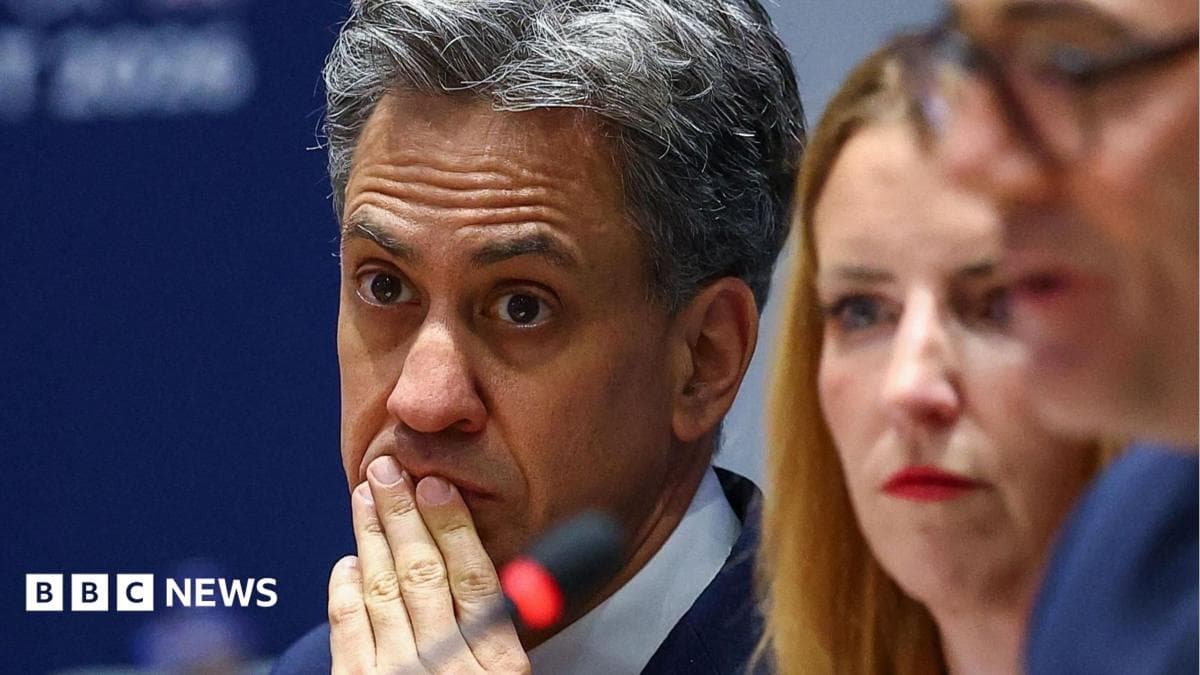
A deal agreed between the UK and the European Union on Friday will come into force regardless of whether the two sides can negotiate a separate tuition fees agreement, Foreign Secretary Ed Miliband has told the BBC.
The measures agreed in Brussels include scrapping most checks on British food exports in return for the UK following some EU regulations from 2028, and a new youth mobility scheme.
However, a proposal from the bloc to lower the level of tuition fees paid by EU students in the UK has not been agreed.
European Commission President Ursula von der Leyen said she was "confident" a solution would be found, with Prime Minister Andy Burnham adding "me too" during a press conference announcing the deal.
Meanwhile, asked in his interview with the BBC's Sunday with Laura Kuenssberg programme whether rejoining the EU would be looked at, Miliband said "all the options will be on the table".
It came after the prime minister said that he would discuss possible ideas for even closer ties with the bloc in the coming months.
What is the EU-UK youth experience scheme and when will it start?
Burnham gets his first taste of EU dealmaking and seems hungry for more
Faisal Islam: This cost-cutting UK-EU deal doesn't mean lower prices will follow
UK and EU leaders have hailed the closer cooperation agreement, with Burnham calling the deal a "win-win" that could lower the cost of living and reduce red tape.
The prime minister said the Treasury believes the deal could boost the UK economy by up to £17bn a year.
EU sources had earlier suggested that the bloc might hold up applying the wider deal until it was agreed that EU students who wanted to study in the UK would pay the same fees as British students.
Miliband said it was "absolutely clear" the agreements on food exports, energy and youth mobility would apply, even though there has not been a deal on tuition fees.
"President von der Leyen... was very clear about this at the press conference we just had. She said there are those three agreements and then there's a separate piece of paper and a separate issue, which is looking at the issue of tuition," he said.
Asked again whether the agreements would definitely become law, the foreign secretary said: "Yes, absolutely."
"The dates are set out in 2028 when these things are coming in, we're introducing legislation in Parliament, so definitely."
Miliband said there would be "no cost" to the UK taxpayer for anything agreed at Friday's summit, adding that there would be no new contributions to the EU budget.
He said previously announced agreements on EU schemes like Erasmus+ were a "separate decision" and the summit "was not about cost to the taxpayer".
Speaking on Friday, Burnham argued that polling suggests the UK public "want closer ties" with the EU and the deal "delivers that".
Miliband told the BBC that "of course all the options will be on the table" when pressed on whether rejoining the bloc would be considered, adding that "we will look at the benefits and the costs of all the different options".
He said that while he accepted the result of the 2016 Brexit referendum, "the world has changed massively".
"Europe is changing too, so we've got to look at what that means. It's not about this parliament, we're respecting the red lines in this parliament," he added.
Conservative leader Kemi Badenoch said the deal was "not fair", arguing that UK farmers would have to follow rules set in Brussels and young people from the EU would "compete" with young Britons struggling to get jobs at home.
She also claimed Burnham had "plucked" the £17bn figure out of thin air, and said the only modelling she had seen of how the agreement could boost the economy put the figure at "0.0%".
Reform UK leader Nigel Farage said Friday marked a "betrayal of the British people" and a good day for the EU to "try and humiliate" the UK.
Farage, who was a leading figure in the 2016 campaign to get Britain out of the EU, wrote on social media: "Like every prime minister before him, Burnham is a total fraud."
Liberal Democrat leader Sir Ed Davey said there needed to be more than "tweaks" to the UK's relationship to the EU.
"A youth mobility scheme is a big step forward, but it's nowhere near enough. We need a whole new deal that actually works for Britain, and fast."


