Israeli judges recommend dropping most serious charges against Netanyahu
The Israeli PM says his trial should end after judges said there was little chance of conviction in one of three cases.
Noticia publicada originalmente por BBC News — World en bbc.co.uk (se abre en una pestaña nueva). Minuto 24 no es autor de este contenido.
Claves de la noticia
- Jueces israelíes sugirieron a la fiscalía general que retire los cargos de soborno contra Benjamin Netanyahu en el primero de sus tres casos, al considerar que hay pocas probabilidades de condena.
- En el segundo caso de corrupción, los jueces pusieron en duda que las acciones de Netanyahu constituyeran una conducta criminal, y en el tercero dejaron abierta la posibilidad de condena.
- Los magistrados también propusieron buscar un acuerdo de culpabilidad en el tercer caso y pidieron repensar la forma en que debe avanzar el juicio por interés público.
- Netanyahu, que niega las acusaciones, pidió que el juicio termine de inmediato, mientras la fiscal general Gali Baharav-Miara dijo que estudiará las recomendaciones.
- La decisión llega mientras Netanyahu, en funciones, intenta mantenerse en el poder tras unas elecciones generales no concluyentes, en las que ninguna de las dos principales fuerzas logró la mayoría.
Contexto
Benjamin Netanyahu es una figura central de la política israelí desde hace décadas y fue el primer primer ministro en ejercicio en enfrentarse a un juicio penal, algo que se ha convertido en un tema muy polémico en el país. La fiscalía general es el organismo encargado de decidir si se presentan y sostienen acusaciones, por lo que una recomendación judicial de reconsiderar los cargos tiene un peso significativo, aunque no es vinculante. Los casos se han prolongado durante años, en parte por la guerra en Gaza. Las acusaciones han profundizado las divisiones en Israel, donde también se debate una reforma judicial impulsada por el Gobierno. Además, Netanyahu tiene una orden de arresto de la Corte Penal Internacional, que él también rechaza.
Resumen elaborado por Minuto 24 con ayuda de inteligencia artificial a partir de la noticia publicada por BBC News — World. Puede contener imprecisiones: ante cualquier duda, consulta la fuente original.
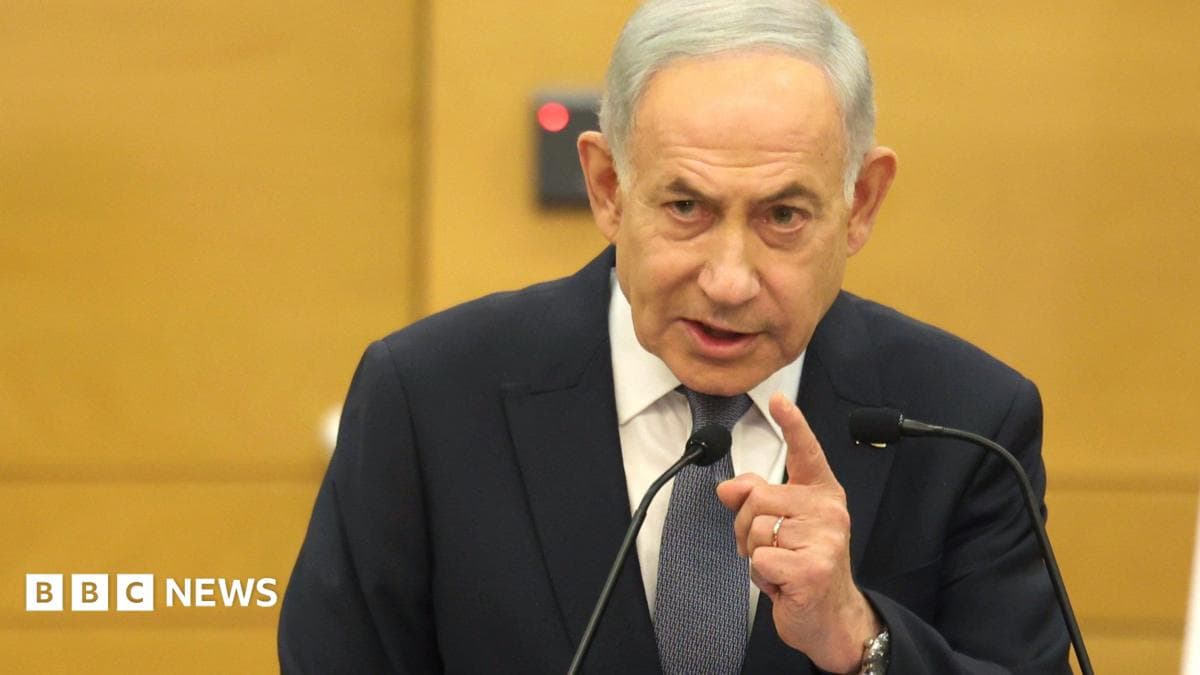
Judges in Israel have suggested prosecutors drop bribery charges against Benjamin Netanyahu, potentially handing the caretaker prime minister a boost as he fights for his political survival.
The judges told the attorney general that there was little chance of conviction in the first of three cases he is facing, in which he is accused of granting government favours in exchange for positive media coverage.
They also questioned whether his actions amounted to criminal conduct in a second corruption case, and suggested prosecutors seek a plea deal in a third.
Netanyahu has consistently denied the allegations against him and called on Wednesday for the trial to be ended "immediately".
"Ten years of terrible suffering for me, my family, my son," he said in a televised statement.
"Ten years of incitement to hatred that wounds the soul."
Netanyahu was first charged in 2019, but court proceedings have been prolonged in part by the recent Israel-Gaza war.
The case now under serious doubt, known as Case 4,000, concerns an alleged "reciprocal arrangement" between Netanyahu and the controlling shareholder in Israel's biggest telecoms company. Both denied any wrongdoing.
In a highly unusual step, a judging panel at the Jerusalem District Court summoned Israeli Attorney General Gali Baharav-Miara on Wednesday to express their concerns.
"The chances of conviction are low – to an extent that warrants reconsidering the matter," Judge Rivka Friedman-Feldman told her, Israeli media reported.
The judges also cast doubt on whether Netanyahu's actions, which are subject to a second case – concerning another alleged quid-pro-quo with another media baron, known as Case 2,000 – met the threshold for criminality.
While they left open the possibility of a conviction in the third case: Case 1,000, which alleges Netanyahu acted for the benefit of an Australian billionaire after being gifted cigars and champagne by him.
Netanyahu: What are the corruption charges?
However, the judges told the attorney general that, in the public interest, there needed to be a "rethink" in how the trial should move forward, Israeli media report.
Baharav-Miara said she would consider the judges' recommendations.
It has been six years since Netanyahu became Israel's first sitting prime minister to face a criminal trial.
He has always claimed to be the victim of a political witch-hunt and said on Wednesday that the "fabricated cases" against him were now falling apart.
The cases have continued to progress in court while Netanyahu remained in power throughout the war in Gaza, though judges agreed to reduce the number of hearings due to security concerns around the conflict.
The accusations against him have rocked Israeli politics, fuelling already deep divisions. His trial has coincided with controversial, far-reaching judiciary reforms by Netanyahu's government.
For his opponents, Netanyahu's fear of prison has distorted his decision-making as prime minister and made him especially dependent on his far-right coalition partners to remain in power.
This latest development will give a boost to Netanyahu, whose political opponent Gadi Eisenkot is currently attempting to form a coalition government after an inconclusive general election last month.
While Netanyahu's parliamentary bloc won more seats than that of his rival, both fell short of an outright majority. Israel's president has offered Eisenkot the first chance to form a new administration.
Netanyahu remains subject to an arrest warrant from the International Criminal Court for alleged war crimes and crimes against humanity in Gaza, which he also denies.