Nato chief vows defence against space threat after Russian nuclear satellite reports
German media said Russia planned to launch a satellite with a nuclear warhead into space in coming weeks.
Noticia publicada originalmente por BBC News — World en bbc.co.uk (se abre en una pestaña nueva). Minuto 24 no es autor de este contenido.
Claves de la noticia
- La OTAN, por boca de su secretario general Mark Rutte, aseguró que defenderá cualquier amenaza en el espacio tras informes sobre un posible lanzamiento de un satélite ruso con armas nucleares.
- Según medios alemanes citando fuentes anónimas, los servicios de inteligencia compartieron entre los países de la OTAN este mes informes sobre un posible lanzamiento en los próximos 60 días.
- El satélite, supuestamente llamado "Sputnik-S", llevaría una ojiva nuclear y podría usarse para inutilizar o destruir otros satélites de comunicación y observación.
- El Kremlin y la embajada rusa en Berlín rechazaron las acusaciones, que calificaron de infundadas y parte de una campaña de propaganda, y el canciller alemán Friedrich Merz no confirmó ni desmintió los informes.
Contexto
El Tratado del Espacio Ultraterrestre de 1967, firmado por Rusia y otros países, prohíbe colocar armas de destrucción masiva en órbita, por lo que una eventual arma nuclear espacial supondría un incumplimiento de ese acuerdo. Los satélites son fundamentales para las comunicaciones, la vigilancia y la navegación militar, lo que explica la preocupación por posibles ataques contra ellos. El debate sobre armas en el espacio se ha intensificado en los últimos años, y en 2024 Estados Unidos afirmó que Rusia desarrollaba un arma antisatélite con ojiva nuclear, acusación que Moscú negó. Estados Unidos y China también han desplegado o planean desplegar sistemas en el espacio fuera del tratado.
Resumen elaborado por Minuto 24 con ayuda de inteligencia artificial a partir de la noticia publicada por BBC News — World. Puede contener imprecisiones: ante cualquier duda, consulta la fuente original.
Nato chief Mark Rutte has said the alliance will defend against any threats in space after reports that Russia was preparing to launch a nuclear-armed satellite.
Intelligence reports about a possible launch in the next 60 days had been shared among Nato countries this month, according to German media outlets. It was not clear which country had authored the reports.
Asked about the reports, Rutte said: "We will always make sure we defend every inch of Nato territory, and that includes making sure we are safe when it comes to the space element."
Kremlin spokesman Dmitry Peskov said he hadn't seen the latest reports but dismissed reports citing "unknown sources" as "hardly worth taking seriously".
The Russian embassy in Berlin told German media it rejected what it called "unfounded allegations" and said the reports were part of a "propaganda campaign".
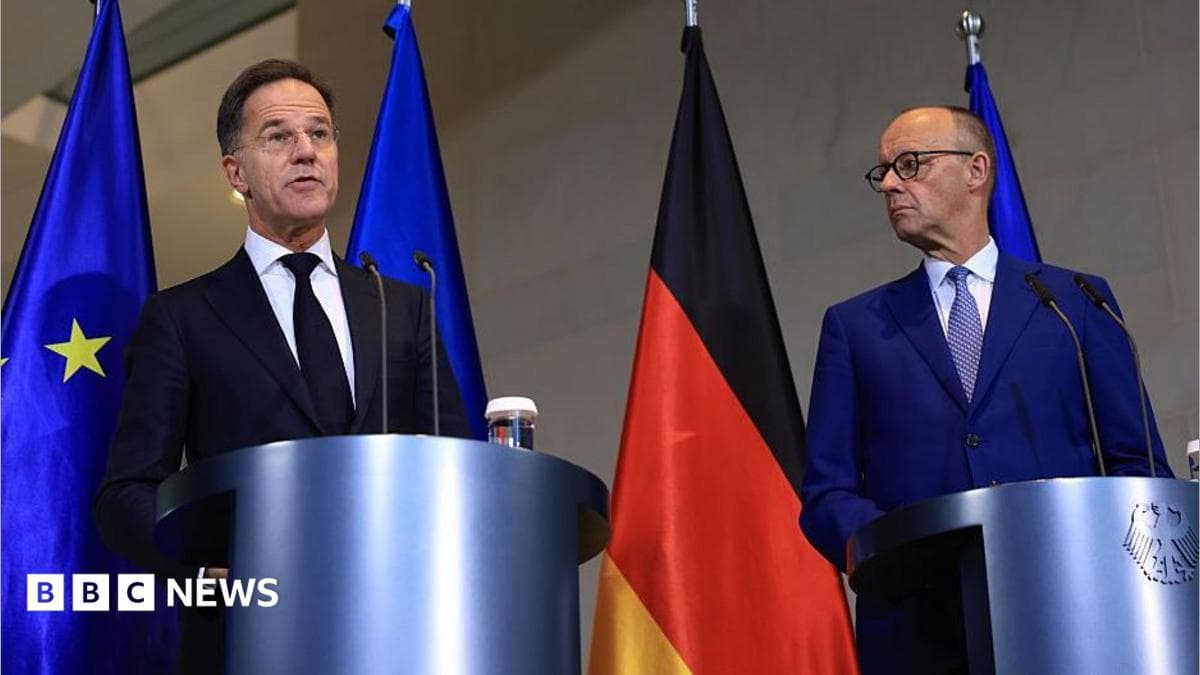
Rutte told the press conference in Berlin that Nato had a variety of response options.
"When it comes to the military domain, we will always make assessments of our deterrence and defence and make updates where necessary," he said.
Citing anonymous German military and intelligence sources, the reports by broadcasters NDR and WDR, and newspaper Sueddeutsche Zeitung, said the Russian satellite was dubbed "Sputnik-S" and was equipped with a nuclear warhead. It could be used to disrupt or destroy other satellites, including important communication and observation satellites.
Standing alongside Rutte, German Chancellor Friedrich Merz did not confirm or deny the reports of Russia's plans, but said they "reveal the level of escalation Russia is evidently prepared to pursue".
"Reports that Russia is planning to introduce nuclear weaponry into space are not new, yet they remain no less shocking," he said.
A German government spokesman earlier also did not confirm or deny the reports, but said it was taking the reports "very seriously", AFP reported. The spokesman, however, warned against causing "excessive nervousness regarding hypothetical dangers".
Josef Aschbacher, the head of the European Space Agency, said having nuclear weapons in space was "the ultimate nightmare scenario", German paper Handelsblatt reported.
Russia is a signatory to the 1967 Outer Space Treaty, which bans weapons of mass destruction from orbit. Other countries, including the US and China, have deployed or plan to deploy other weapons in space, exploring other capabilities outside of the treaty, such as targeting rivals' satellites - which are key for military communications, surveillance and navigation.
In 2024 the US claimed Russia was developing a "space-based" anti-satellite weapon armed with a nuclear warhead. Russia denied the accusation.
"Our position is clear and transparent. We have always been categorically against the deployment of nuclear weapons in space and we are still against it," President Vladimir Putin said at the time.
In September the US Secretary of the Air Force Troy Meink said the US had "on-orbit, space-control weapons" circling the planet, but did not provide specifics. In response to the announcement, the Kremlin's Peskov told Russian media that space "must be free of any weapon".