Presidential villa suffers water and power cuts, Nigerian leader says
Bola Tinubu says he was shaving last week when the water cut out - an experience familiar to many Nigerians.
Noticia publicada originalmente por BBC News — World en bbc.co.uk (se abre en una pestaña nueva). Minuto 24 no es autor de este contenido.
Claves de la noticia
- El presidente nigeriano Bola Tinubu afirmó que la residencia presidencial de Aso Rock, en Abuja, sufre cortes de agua y electricidad, problemas comunes para los ciudadanos.
- Tinubu explicó que el corte de agua ocurrió mientras se afeitaba la semana anterior, y prometió corregir estos problemas.
- Hizo estas declaraciones en una sesión especial de oración organizada por su familia en Lagos, antes de las elecciones previstas para enero de 2027.
- Según algunos informes, un sistema solar de minirred para la villa, presupuestado con 10.000 millones de nairas, estaría en fase de pruebas.
Contexto
Nigeria sufre desde hace años escasez de electricidad y de agua, sobre todo en ciudades como Lagos y Abuja, donde los apagones rotativos afectan a hogares y empresas. Tinubu prometió resolver el problema de la electricidad durante su campaña de 2023, y la exactitud y el alcance de esa promesa son ahora motivo de debate. Su candidatura a la reelección vuelve a poner el asunto en el centro de la campaña. Según la BBC, los problemas recientes se deben sobre todo a la falta de suministro de gas y a la menor producción hidroeléctrica. Los partidarios del presidente citan mejoras rurales y una inversión aprobada en una nueva superred este-oeste como prueba de sus esfuerzos.
Resumen elaborado por Minuto 24 con ayuda de inteligencia artificial a partir de la noticia publicada por BBC News — World. Puede contener imprecisiones: ante cualquier duda, consulta la fuente original.
Published23 November 2026, 11:15 GMT
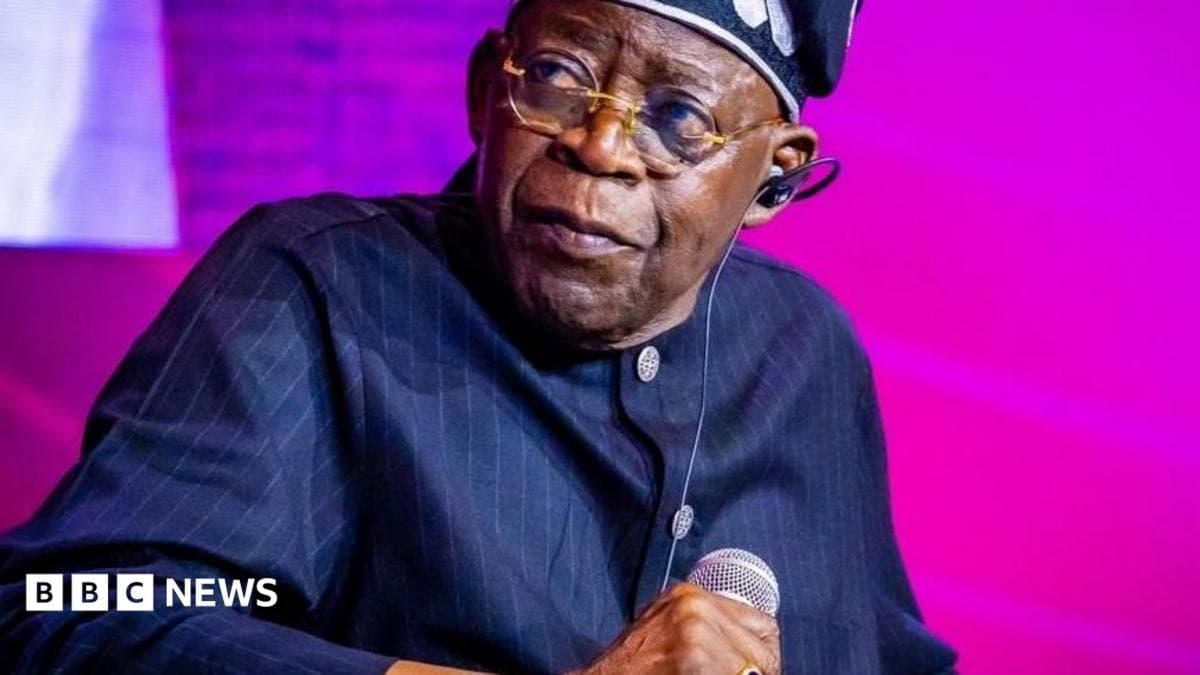
Nigeria's President Bola Tinubu says the presidential villa suffers from cuts in electricity and water - issues that are all too common for the country's ordinary citizens.
He said he was shaving last week when the water supply cut at the villa, known as Aso Rock, in Abuja.
He is seeking re-election next January and vowed to address these issues.
Tinubu made the disclosure on Sunday at a special prayer session organised in his honour by members of his family in Lagos.
He explained: "On the Wednesday of last week, I was shaving, and the water went off. In the villa, you won't know punishment dey dia too [there’s punishment there too in Nigerian pidgin].
"The water went off. So we will correct all this. No light, no water, no electricity, no development. We have just started. We can do it, and we will do it for Nigeria,” he said.
Aso Villa serves as both the office and official residence of the Nigerian president. It is situated at the base of Aso Rock in Abuja.
Last year, 10bn naira (£5.5m; $7.2m), was allocated in the budget for the installation of a solar mini-grid in the Aso Villa as part of efforts to address rising electricity bills and unstable power supply.
Some reports say it has been completed and is in the testing phase, with plans to fully disconnect the facility from the national grid soon.
Can Nigeria's president regain voters' trust after painful first term?
Search and rescue teams race against time after Nigeria boat tragedy
Nigeria has long endured electricity shortages, but recent severe disruptions have been caused primarily by insufficient gas supplies and declining hydropower output, rather than the usual nationwide grid collapse.
Persistent blackouts in Lagos, Abuja and elsewhere have forced distribution companies to implement rotating power cuts, severely impacting households and businesses.
The country also suffers from chronic water shortages, the result of a structural crisis rooted in the gap between rapid urban population growth and decaying, inadequate public water infrastructure, leaving millions without reliable supplies, especially in Lagos.
Tinubu made a high-profile electricity promise during the 2023 election campaign, but the exact wording and how binding it is has become a major point of contention ahead of the election on 16 January 2027.
In 2022, months before the last presidential election, Tinubu said: "Whichever way, by all means necessary, you will have electricity, and you will not pay for estimated bills any more. A promise made will be a promise kept.
"If I don't keep the promise and I come for a second term, don't vote for me, unless I give you adequate reasons why I couldn't deliver,” he said.
Despite the continuing power cuts, some of his supporters point to improved electricity supplies in rural areas as well as a recently approved $2bn (£1.5bn) investment in a new East–West Super Grid, designed to expand electricity transmission capacity and strengthen the national grid, as evidence that he is doing his best to keep to his promise.
Tinubu defeated the country’s former Vice-President Atiku Abubakar as well as former Anambra state governor Peter Obi in 2023 and the three are seen as the strongest contenders once again.
More about Nigeria from the BBC:
Nigerian youth have shown their power in the past - why aren't they shaping this election?
BBC launches programme for children forced from school by bandits and poverty in West Africa
'This is our company': Nigerians show off oil wealth after share-buying frenzy
Go to BBCAfrica.com, external for more news from the African continent.