Rivers overflow in Peru and Ecuador as powerful El Niño drenches region
Flooding comes after weeks of downpours that have killed at least 34 in Ecuador, as forecasters warn of more rain Rivers overflowed across northern Peru and coastal Ecuador on Saturday, prompting water rescues, evacuations and road closures as relentless storms dumped rain on…
Noticia publicada originalmente por The Guardian — World en theguardian.com (se abre en una pestaña nueva). Minuto 24 no es autor de este contenido.
Claves de la noticia
- Los ríos se desbordaron en el norte de Perú y la costa de Ecuador, obligando a realizar rescates en agua, evacuaciones y cierres de carreteras tras lluvias persistentes.
- En Ecuador, las lluvias han causado al menos 34 muertes desde finales de agosto, según la agencia nacional de gestión de riesgos, y dos personas murieron el viernes por un deslizamiento de lodo.
- En Piura cayeron 143 mm de lluvia en 24 horas, un récord, y la presidenta Keiko Fujimori indicó que unas 400 personas fueron rescatadas de casas inundadas.
- Las elecciones locales de Ecuador, reprogramadas para evitar el pico de El Niño, se vieron afectadas, ya que se trasladaron mesas de votación en cinco provincias por las lluvias.
- Las autoridades advirtieron de más lluvias, mantuvieron la alerta roja en Piura y Tumbes hasta el lunes y prevén que El Niño siga con fuerza extraordinaria hasta febrero.
Contexto
El Niño es un fenómeno climático que comienza con el calentamiento de las aguas del Pacífico tropical y que altera las lluvias, las temperaturas y las tormentas en distintas partes del mundo. Sus efectos son especialmente graves en las costas del Pacífico de Ecuador y Perú, que normalmente son secas, por lo que las viviendas y las infraestructuras pueden no estar preparadas para tanta agua. Además, el fenómeno ya repercute en la economía: según el artículo, ha encarecido los alimentos al reducir cosechas y capturas de pescado, y el banco central peruano prevé que restará crecimiento este año y en 2027. La noticia importa porque combina pérdidas humanas, daños materiales y presión sobre los precios en una región vulnerable.
Resumen elaborado por Minuto 24 con ayuda de inteligencia artificial a partir de la noticia publicada por The Guardian — World. Puede contener imprecisiones: ante cualquier duda, consulta la fuente original.

Rivers overflowed across northern Peru and coastal Ecuador on Saturday, prompting water rescues, evacuations and road closures as relentless storms dumped rain on the region.
The increased flooding, which stretched along the Pacific coast from Ecuador’s border with Colombia into northern Peru, came after weeks of heavy rain fuelled by a particularly powerful El Niño.
The climate phenomenon starts with a warming of the tropical Pacific and influences rainfall, temperature and storms around the globe.
Along these normally dry coasts, it has brought downpours that have killed at least 34 people in Ecuador since late August, according to the country’s risk management agency. Two died on Friday when a mudslide crashed into their homes.
Forecasters warned of more rain, extending a red alert for Peru’s northern Piura and Tumbes regions through Monday and saying El Niño would remain at “extraordinary” strength until February.
In north-western Ecuador’s Esmeraldas province, police and firefighters evacuated families after two rivers burst their banks.
Floods and landslides had damaged more than 50 road sections across the country by Saturday morning, closing at least 10, including the main highway between the capital, Quito, and the coast.
The storms also disrupted Ecuador’s local elections on Sunday, which officials had rescheduled from February to avoid El Niño’s expected peak. The national electoral council said on Friday it had moved polling stations in five provinces because of the rains and warned that dozens more were at risk.
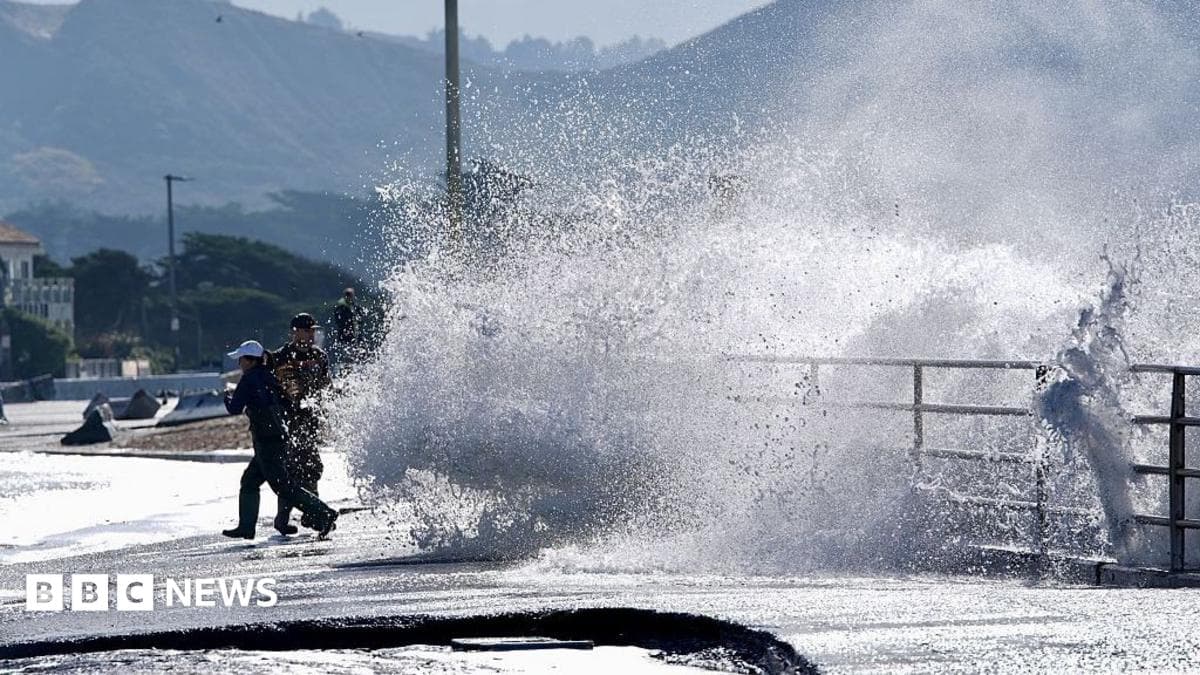
Across the border, the overflowing Tumbes River flooded part of the Pan-American highway, Peru’s main north-south artery, and police this week rescued seven ranchers trapped by its waters. Pacific swells have also battered hotels in coastal resort towns.
In Peru’s north-western city of Piura, a record 143mm (5.6in) of rain fell in 24 hours, leaving streets under waist-high water. Crews pulled 400 people from flooded homes, said the Peruvian president Keiko Fujimori, who toured a submerged neighbourhood in the middle of a lightning storm on Friday. About a dozen people were still trapped inside, she said.
Fujimori has warned that Peru will face “a mega Niño”, and her government is coordinating aid from the US and China.
Even in Peru’s arid capital of Lima, El Niño has brought persistent drizzle to some neighbourhoods and unusual heat to others, with temperatures reaching 32C (90F), nearly 10C above normal.
“My house is an oven,” said Cindy Cueto, a mother of three who cooks at a community soup kitchen in one of the city’s hillside neighbourhoods.
The phenomenon has also pushed up food prices by cutting crop yields and fish catches, helping drive Lima’s annual inflation above 5% in October, the highest in three years. Peru’s central bank expects El Niño to cost the economy nearly a percentage point of growth this year and more than a point in 2027.
“It’s gotten worse,” said Elizabeth Espinoza, a mother of five who sells gelatine desserts on Lima’s outskirts. “Things are so expensive, the money doesn’t cover anything any more.”