Rubio says US not 'under systemic attack' after series of tech outages
Secretary of State Marco Rubio said there was "zero evidence" supporting theories online that recent disruptions affecting Microsoft, banks and flights are connected.
Noticia publicada originalmente por BBC News — World en bbc.co.uk (se abre en una pestaña nueva). Minuto 24 no es autor de este contenido.
Claves de la noticia
- El secretario de Estado de EE. UU., Marco Rubio, descartó que la serie reciente de caídas tecnológicas esté conectada y afirmó que no hay pruebas de ello.
- Rubio dijo: "No estamos bajo un ataque sistémico", tras los temores públicos de que las interrupciones fueran parte de un complot.
- El director de Inteligencia Nacional, Jay Clayton, también aseguró a Fox News que las caídas no fueron causadas por un ciberataque, sino por actualizaciones de sistemas en muchas instituciones.
- Las caídas incluyeron una interrupción de Microsoft, la parada nacional de vuelos de la FAA durante más de cuatro horas, fallos bancarios de JPMorgan Chase, problemas en servicios de Apple y una red de la NSA.
- Las empresas y agencias afectadas han atribuido los fallos a problemas técnicos internos y no a actores externos, y los expertos en ciberseguridad coinciden en que no hay evidencia de un vínculo.
Contexto
La noticia surge en un contexto de creciente preocupación pública por la fiabilidad de la infraestructura digital que sostiene servicios esenciales como los vuelos, la banca y las comunicaciones gubernamentales. Cuando varios sistemas fallan en pocos días, es natural que aumenten las sospechas de un ataque coordinado, sobre todo en un país donde la seguridad nacional es un asunto sensible. Por ello, las declaraciones de un alto funcionario y de los organismos responsables tienen peso, pues buscan evitar pánicos como el acaparamiento de dinero o de productos. Los expertos citados señalan que muchos sistemas son antiguos y se están modernizando rápidamente, lo que incrementa el riesgo de fallos. Entender esta distinción entre fallo técnico y ataque es clave para valorar la situación.
Resumen elaborado por Minuto 24 con ayuda de inteligencia artificial a partir de la noticia publicada por BBC News — World. Puede contener imprecisiones: ante cualquier duda, consulta la fuente original.
Published18 November 2026, 02:15 GMT
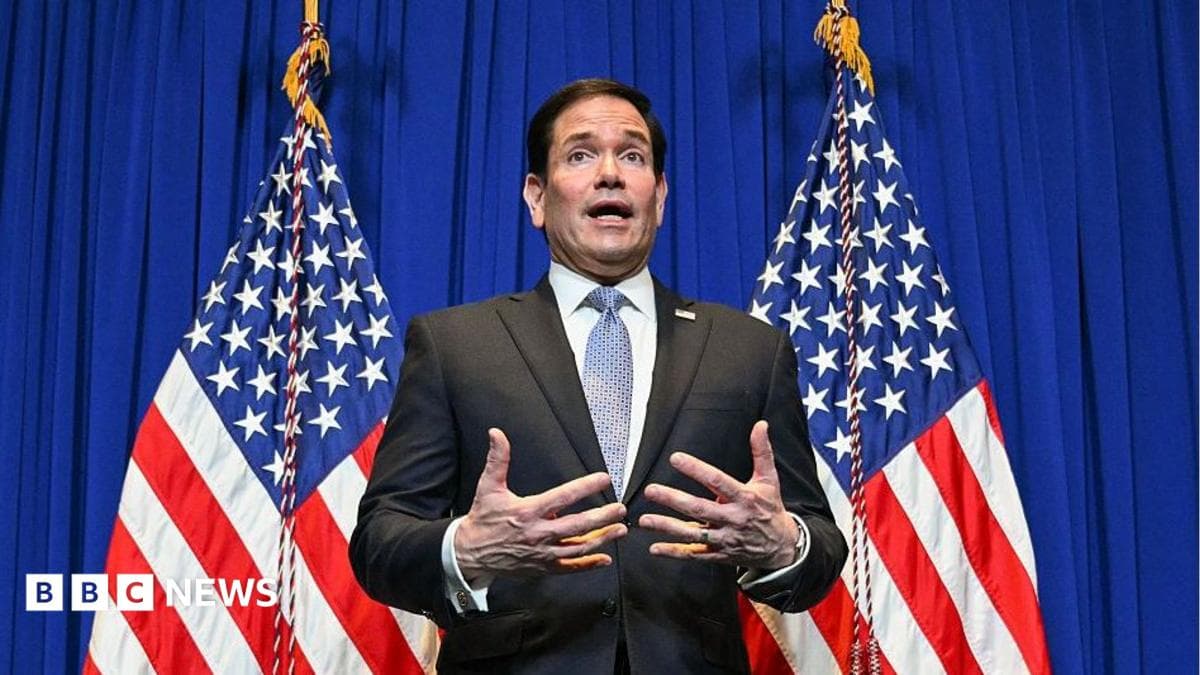
US Secretary of State Marco Rubio has dismissed widespread concerns online that the series of recent tech outages in the past week are connected, telling reporters there was "zero evidence" of any link.
Rubio acknowledged that "people are fearful" the spate of outages, which included all flights being grounded in the US and widespread disruptions to banking, Apple and Microsoft services, could be linked or part of a plot.
"We are not under systemic attack," he said. "These events, one has nothing to do with the other, they are not inter-related."
Cyber-security experts have agreed that there is no evidence linking the outages, and many of the issues appear due to updates to old infrastructure.
In the past week, there has been a massive Microsoft outage, an apparent tech glitch which grounded all US flights for hours, and issues for the National Security Agency, outages affecting the biggest US banks and Apple.
Every affected company or agency has said the issue was not cyber-related and not the work of an outside actor.
Rubio's comments came hours after US Director of National Intelligence Jay Clayton also addressed the issue, telling Fox News the outages were not the product of a cyber-attack. He explained "lots of institutions" are patching or upgrading systems, which has caused some disruption.
Rubio was asked whether the Trump administration was concerned public fears could lead to stockpiling or a run on the banks.
He said the best way to combat such fears was for the US government to share everything they know with the American people.
"Every indicator we have is that every single one of these events has an explanation or a cause that has nothing to do with a cyber-criminal, has nothing to do with a hostile actor or another country," he said.
Technology-related disruptions have happened almost daily since Thursday, when a Microsoft outage disrupted many of its services, including email.
The next day, the US Federal Aviation Administration halted flights across the US for more than four hours with a rare national ground stop. It was the longest halting of flights since the 11 September 2001 attacks on the US.
The US transport secretary said the issue was technical and caused by a copper wire upgrade and outdated equipment.
On Monday, a United Airlines technology failure delayed about 150 flights and a JPMorgan Chase software problem disrupted service at the biggest and most utilised banks in the US.
Both United and Chase said a software issue was behind the glitch.
Apple users were impacted by outages affecting iCloud and Apple Pay on Tuesday. The company said the cause was not a cyber-attack but the outage was triggered by an an internal update.
The same day, a highly classified network used by the US National Security Agency (NSA) for internal communications also went offline for a period of time.
Tech experts weigh in: 'No conspiracy here'
Cybersecurity experts say there is no evidence connecting the Microsoft, airline, and bank disruptions from the last five days.
Kris Beevers, CEO and co-founder of the network and infrastructure management company NetBox Labs, acknowledged the circulating theories on social media linking the barrage of outages.
"There is no conspiracy here," he told the BBC.
"There is something more ordinary, and more important to understand: the infrastructure that runs the world is changing faster than ever, and change is risk. Much of it is 30 to 40 years old, with decades of technical debt, and it's now being asked to change very quickly."
Beevers said AI is only part of the story.
"It's putting more strain on these legacy networks, and it's also creating real urgency around security," he said.
"Our customers are the amazing teams behind these networks at airlines, banking, energy, and retail who are essentially doing heart surgery on a global scale to get these networks back up and running quickly."
Vice President of Threat Intelligence for Palo Alto Networks Unit 42, Sherrod DeGrippo, said: "What this week really underscores is how tightly coupled, and fragile, our core digital infrastructure is, where a single software bug or router failure can cascade nationwide."