Three men sentenced to death in Jordan over fatal church mass shooting
The attack on funeral at a Greek Orthodox church killed nine and injured 34 others last month.
Noticia publicada originalmente por BBC News — World en bbc.co.uk (se abre en una pestaña nueva). Minuto 24 no es autor de este contenido.
Claves de la noticia
- Un tribunal jordano condenó a muerte por ahorcamiento a tres hombres por el tiroteo masivo contra una iglesia que dejó nueve muertos y 34 heridos.
- El ataque ocurrió el 23 de octubre en la iglesia ortodoxa griega San Jorge, en la localidad de Hmoud, durante un funeral cristiano en la gobernación de Karak.
- Las Fuerzas Armadas afirmaron que los condenados fueron hallados culpables de actos terroristas, posesión de armas, promoción de las ideas de una organización terrorista y conspiración.
- Los tres hombres, dos hermanos jordanos y su cuñado, huyeron tras el ataque y fueron detenidos tres días después en una casa abandonada tras un enfrentamiento con las fuerzas de seguridad.
- Tras el ataque, Jordania bombardeó objetivos que calificó de organizaciones terroristas en Syria, operación en la que murieron cinco civiles según fuentes sanitarias sirias.
Contexto
Jordania es un reino de mayoría musulmana que alberga una comunidad cristiana considerable, concentrada en lugares como Karak, y los ataques contra templos religiosos son poco habituales en el país, lo que hace que este caso tenga una gran repercusión. La pena de muerte sigue vigente en Jordania y las ejecuciones se realizan mediante ahorcamiento; el país tuvo periodos sin ejecuciones entre 2006 y 2014 y de nuevo desde 2017 hasta junio de este año. Aún no está claro por qué los atacantes eligieron esa iglesia en concreto, y las autoridades no han identificado públicamente a los condenados.
Resumen elaborado por Minuto 24 con ayuda de inteligencia artificial a partir de la noticia publicada por BBC News — World. Puede contener imprecisiones: ante cualquier duda, consulta la fuente original.
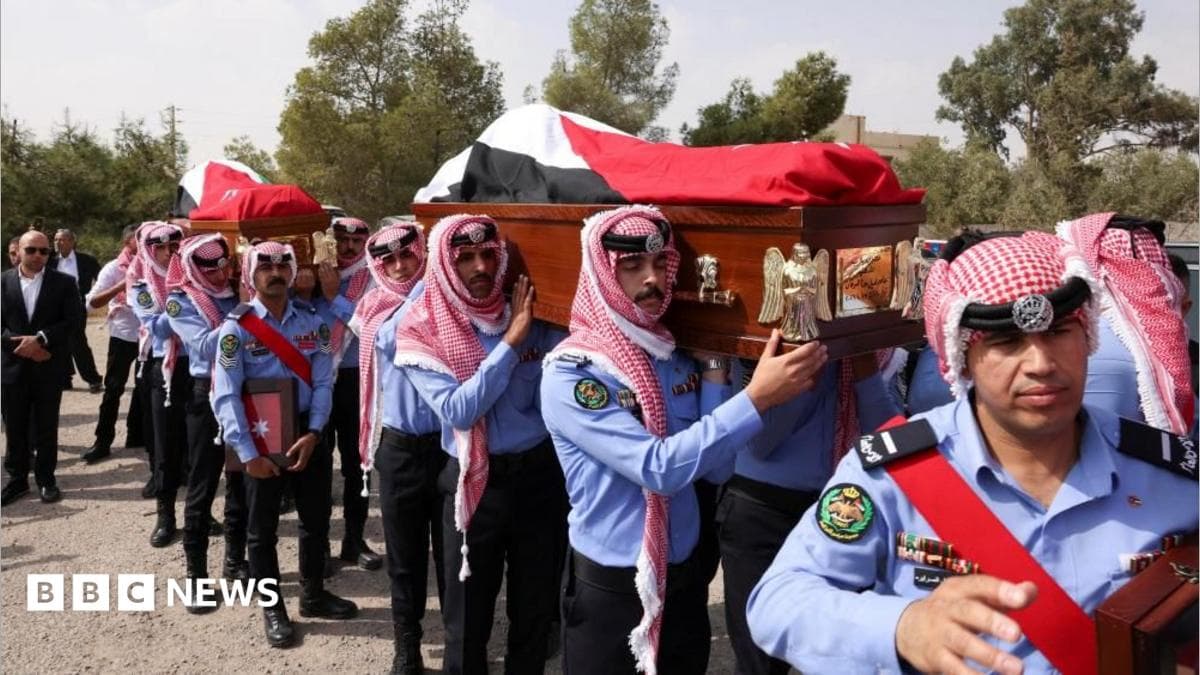
A Jordanian court has sentenced three men to death by hanging for carrying out a fatal mass shooting on a church last month.
The attack on 23 October killed nine people and injured 34 others who had been attending a Christian funeral at a Greek Orthodox church in Karak governorate.
Jordan's Armed Forces said in a statement on Sunday that the men had been convicted of committing "terrorist acts", as well as possessing weapons, "promoting the ideas of a terrorist organisation" and "conspiracy to commit terrorist acts".
The three men - two Jordanian brothers and their brother-in-law - fled the scene of the attack and were arrested three days later. They have not been publicly identified.
Karak is home to a sizeable Christian community in the Muslim-majority kingdom.
CCTV footage from the day of the attack showed three men holding guns approaching and firing on St George's church in the village of Hmoud.
A second video showed dead and wounded people lying on the ground amid chaotic scenes at the church.
It is still unclear why the attackers chose to target that specific church.
Shortly after the attack, Jordan's King Abdullah II wrote on X: "The terrorist attack against Karak will be met with the harshest retaliation.
"Those who delude themselves into thinking that they can divide Jordanians with their bullets have no chance in the face of our unity."
The three men fled the scene of the shooting and were later located inside an abandoned house in Karak governorate, south of the capital, Amman.
They refused to surrender and opened fire on security forces, who returned fire and wounded all three of them, the Public Security Directorate said at the time. No security personnel were hurt in the shootout.
King Abdullah praised security forces for chasing the suspects "to the very end".
The week after the Karak shooting, Jordan struck what its military said were "terrorist organisations" in Syria in retaliation to the church attack.
Syrian health officials told state media that five people, including women, children and an elderly man, were killed in the strike on a village in the southern Daraa province. Jordan said its fighter jets had killed and wounded "several terrorists" without giving further details.
Jordan said it had co-ordinated with the Syrian government, but Syria said it had not been notified in advance.
Executions in Jordan are carried out by hanging. The kingdom previously observed an unofficial ban on executions from 2006 to 2014, and another pause from 2017 until June this year.