Trump threatens ban on US firms building AI data centres overseas
The US president provided little detail on the potential policy, saying others in his team were hearing about it for the first time.
Noticia publicada originalmente por BBC News — World en bbc.co.uk (se abre en una pestaña nueva). Minuto 24 no es autor de este contenido.
Claves de la noticia
- Donald Trump afirmó que prohibirá a las empresas estadounidenses construir centros de datos de IA en el extranjero, amenazando con un "tremendo impuesto" para quienes lo hagan.
- Trump dijo que la medida busca evitar que China se quede con esas instalaciones, aunque proporcionó pocos detalles y no quedó claro si se convertirá en política.
- Según Trump, otros miembros de su gabinete acababan de conocer la idea, y no está claro cómo se aplicaría la norma si se aprueba.
- La propuesta llega días después de que Washington exigiera licencias para comprar chips avanzados, medida que afectará a países del sudeste asiático con fuertes inversiones en centros de datos.
- Trump también criticó específicamente una inversión de Google en Finlandia, cuyas obras en dos centros se detuvieron por preocupaciones sobre la tala de más de 300 hectáreas de bosque.
Contexto
Los centros de datos son grandes naves que albergan los chips y servidores necesarios para ejecutar sistemas de inteligencia artificial. Su construcción se ha convertido en un tema político en Estados Unidos, donde preocupan el ruido, el consumo de energía y el impacto en zonas rurales, y donde varios candidatos demócratas defendieron normas más estrictas en las elecciones de noviembre. Grandes empresas tecnológicas como Meta y Google han firmado acuerdos para construir instalaciones fuera del país, mientras Canadá busca atraer estos proyectos ofreciendo menos oposición local. La posible medida de Trump, que aún no tiene un mecanismo de aplicación definido, se suma a la tensión con China por el control de la tecnología de IA y el acceso a su capacidad de cómputo.
Resumen elaborado por Minuto 24 con ayuda de inteligencia artificial a partir de la noticia publicada por BBC News — World. Puede contener imprecisiones: ante cualquier duda, consulta la fuente original.
Published20 November 2026, 19:51 GMT
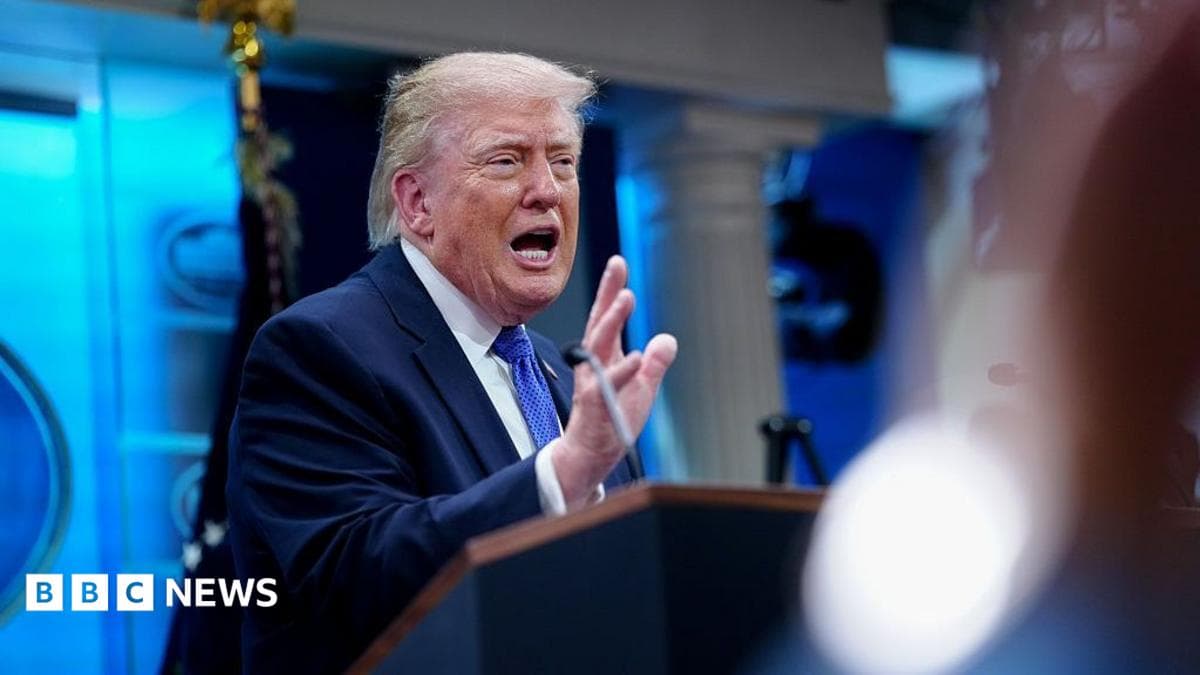
Donald Trump has said he will ban US companies from building AI data centres overseas, threatening a "tremendous tax" for tech firms who do so.
"We're going to keep it all in this country," the US president said, while providing little detail on the potential policy he said others in his cabinet were hearing about for the first time.
Data centres were a central issue in the midterm elections earlier in November, with many Democratic candidates promising tougher regulation on their construction.
Tech giants including Meta and Google have entered agreements to build data centres overseas. It remains unclear how such a policy would be enforced if it was brought in.
"We're not going to allow our companies to build data centres outside of our country," Trump told reporters in a press briefing following his return from his trip to Asia.
"Because China will take all of them, and we're not allowing that to happen."
But whether that idea will become policy remains unclear.
"I don't know if that's a breaking story, but I haven't even said that to my people. But I'm telling them now, they're here," he said.
Trump floated the policy after saying the US was leading on data centre construction, and he would not allow China to beat the US when it came to AI - which he calls super intelligence, or SI.
It also follows an announcement earlier this week that would restrict the export of advanced computer chips and who can access the computing power provided by them.
Washington on Monday announced firms would require a licence to buy advanced chips, so US officials can monitor whether they are being used to serve Chinese companies or they are being smuggled into China.
The move will impact South East Asian countries that have invested heavily in data centres, as Chinese companies seek to rent computing power from overseas.
Why Canada is embracing AI data centres while the US pushes back
Data centres are crucial to the AI boom. The vast warehouse-style buildings house the advanced computer chips and servers that are needed to run AI programmes such as Claude and ChatGPT.
As of April there were about 3,000 data centres across the US, with another 1,500 in various stages of approval and construction, according to the Pew Research Centre.
Many of them are built in rural areas, and concerns about issues including noise pollution and energy consumption helped drive Democratic candidates promising tougher rules on data centre construction to wins on 3 November.
"You ought to take advantage of the data centres. Make them pay you, make them pay your community, but take advantage don't shut them off," Trump said.
"We have a lot of places that want them badly, and they're great places. They have energy and they have everything. They're tremendous assets."
Large tech firms - often called AI hyperscalers due to the size of their investments in AI - have also been branching out, and Canada has made moves to step in to offer itself as an alternative location for these sites, with less local pushback against projects so far.
Meta has already broken ground on a data centre, external in the province of Alberta, and Anthropic has signed a long-term agreement to lease a proposed data centre in Nova Scotia.
The BBC has reached out to Meta for comment on Trump's remarks.
In September Google announced a €13bn ($15bn: £11bn) investment in AI infrastructure in Finland, which included funding for three data centres.
Last month, building work for two of those centres was halted due to concerns over the clearance of more than 300 hectares of forest.
Trump called out the build in Finland specifically, saying his administration was "not allowing that to happen".
Google has been contacted for comment.