UK sanctions top Myanmar military leaders after Rohingya genocide ruling
The UK is joined by several other nations in recognising an ICJ ruling that Myanmar carried out genocide.
Noticia publicada originalmente por BBC News — World en bbc.co.uk (se abre en una pestaña nueva). Minuto 24 no es autor de este contenido.
Claves de la noticia
- El Reino Unido sancionó a cinco altos mandos militares de Myanmar tras el fallo de la Corte Internacional de Justicia que declara que el país cometió genocidio contra los rohingya.
- Es la primera vez que un Estado es declarado culpable de genocidio, según el artículo, en relación con la campaña militar de 2017.
- La Corte determinó por mayoría de nueve votos a seis que la intención genocida era la única inferencia razonable a partir de las pruebas.
- El ministro de Exteriores Ed Miliband afirmó que el presidente Min Aung Hlaing es directamente responsable de muchas atrocidades, y anunció legislación para frenar el suministro de combustible de aviación.
- Londres expulsó al agregado de defensa de Myanmar y llevará el caso al Consejo de Seguridad de la ONU, mientras Australia, Bélgica, Portugal, España y Canadá también reconocen el fallo.
Contexto
La campaña militar de 2017 en el estado de Rakhine, en el oeste de Myanmar, obligó a huir a más de 700.000 rohingya, una minoría musulmana, hacia Bangladesh. El caso se tramitó ante la Corte Internacional de Justicia, principal órgano judicial de la ONU, que resuelve disputas entre Estados. La Convención sobre el Genocidio de 1948 es el marco jurídico que aplica el tribunal. Myanmar, antes conocido como Birmania, es un país con una mayoría budista y una historia de conflictos internos. La noticia es relevante porque es la primera vez que un Estado recibe un fallo de culpabilidad por este crimen, lo que puede tener implicaciones para futuros procesos internacionales y para la respuesta diplomática hacia el país.
Resumen elaborado por Minuto 24 con ayuda de inteligencia artificial a partir de la noticia publicada por BBC News — World. Puede contener imprecisiones: ante cualquier duda, consulta la fuente original.
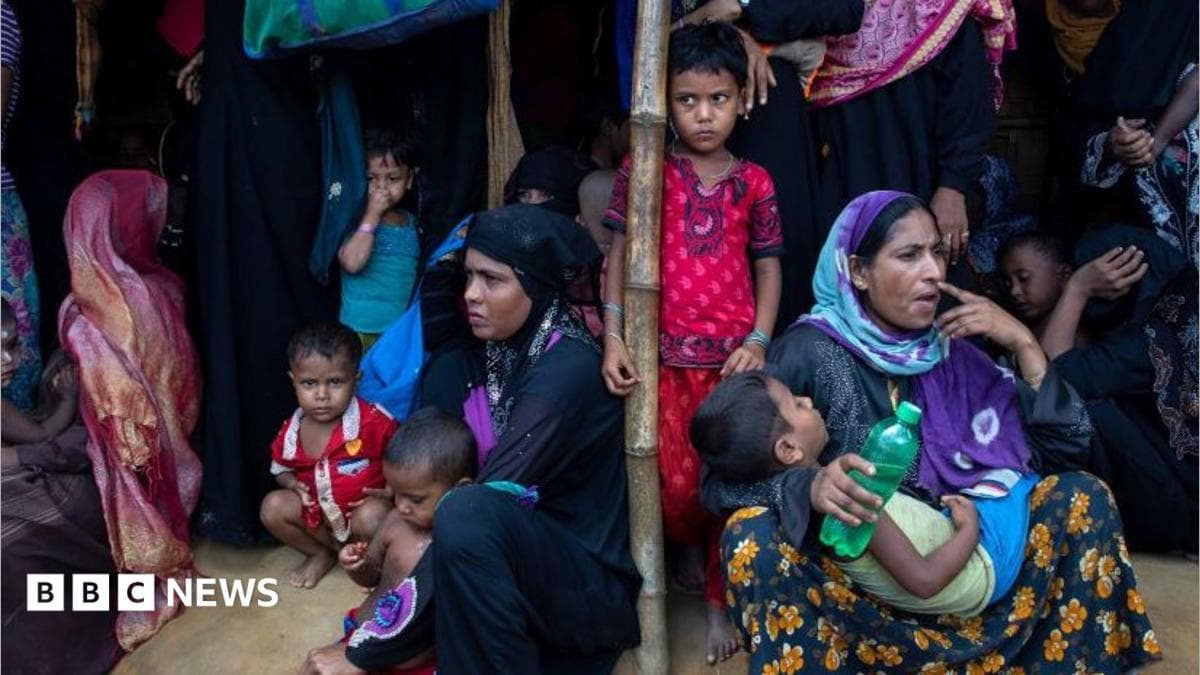
The UK has sanctioned five senior Myanmar military leaders after the International Court of Justice (ICJ) ruled that the country had carried out genocide against the Rohingya minority – marking the first time a state has been found guilty of the crime.
A military crackdown in 2017 killed thousands of Rohingya and forced more than 700,000 to flee Buddhist-majority Myanmar, formerly known as Burma.
The UK is joined by several other countries, external in acknowledging the ICJ ruling, including Australia, Belgium, Portugal, Spain and Canada.
Foreign Secretary Ed Miliband said: "Our response to a crime as profoundly shocking as genocide must reflect our values and must be matched by clear action."
Bowen: Myanmar genocide verdict is historic and could have far-reaching implications
How do you define genocide?
The senior military leaders facing sanctions are Myo Htut Hlaing, Myo Min Tun, Myat Thet Oo, Kyaw Soe and Kyaw Swar Oo.
Miliband added that Myanmar's President Min Aung Hlaing, who was sanctioned by the UK in 2021, is "directly responsible for many of the atrocities that have happened" as he was head of the military at the time of the genocide in 2017.
He said: "Myanmar must stop ongoing violations, investigate, prosecute and punish perpetrators, and prevent such an atrocity from ever happening again."
Miliband also called for an "immediate pause in hostilities to enable humanitarian aid to get through, a stop to air strikes on civilians, and the release of political prisoners, as well as dialogue towards an inclusive political settlement".
The foreign secretary confirmed that new legislation would be passed to stop the supply of aviation fuel to the country, which was known as Burma until 1989.
Last week, he expelled Myanmar's defence attaché after the ICJ ruled the country had committed genocide during the brutal military campaign in 2017.
He told MPs on Monday the UK would raise the issue at the UN Security Council this week, and there would be a dedicated meeting in a fortnight.
The court found on Thursday that "genocidal intent is the only reasonable inference that can be drawn from the evidence" it had seen.
The verdict was reached by a majority of nine votes to six among a panel of judges from around the world. The ICJ also found in favour by majority that Myanmar had violated several other parts of the 1948 Genocide Convention, external.
In its ruling last week, the court determined that about 10,000 Rohingya were murdered during the clearance operation in the western Rakhine state that borders Bangladesh and the Bay of Bengal. Myanmar denied the claims against it.
Reports said that entire villages were burnt down, and that women and girls were raped.
Miliband said more than 1.2 million refugees fled and were being supported by Bangladesh.
Myanmar's leader during the genocide, Aung San Suu Kyi, was deposed by the military in 2021.
MPs heard that air strikes and violence from the Arakan army were still happening.