Clothing factories shut in Bangladesh as workers strike over pay
Workers are striking over demands for a minimum wage of 30,000 taka (£182) a month.
Noticia publicada originalmente por BBC News — World en bbc.co.uk (se abre en una pestaña nueva). Minuto 24 no es autor de este contenido.
Claves de la noticia
- Decenas de fábricas de ropa en Bangladés cerraron por protestas de trabajadores que exigen un salario mínimo más alto.
- Cerca de 150 centros de producción en Savar, Ashulia y Gazipur cerraron durante el fin de semana.
- Los trabajadores piden un salario mínimo de 30.000 takas al mes, frente a los 12.500 actuales, que consideran insuficientes ante el coste de la vida.
- Las asociaciones patronales BGMEA y BKMEA cuestionan seguir en las negociaciones sin garantías de protección para las fábricas.
- El gobierno formó en noviembre un comité para recomendar una nueva escala salarial, que se espera aplique desde el 1 de diciembre.
Contexto
La industria textil es la principal actividad exportadora de Bangladés y uno de los motores de su economía, y emplea a unos cuatro millones de personas que fabrican ropa para grandes marcas internacionales. Bangladés es el segundo mayor exportador mundial de prendas de vestir, detrás de China, por lo que cualquier paralización prolongada puede afectar a los compradores extranjeros. El debate sobre el salario mínimo se enmarca en la presión que sufren los trabajadores por el encarecimiento de la vida. Según la información publicada, la legislación laboral permite a los propietarios suspender la producción y retener salarios cuando hay interrupciones, lo que añade tensión al conflicto.
Resumen elaborado por Minuto 24 con ayuda de inteligencia artificial a partir de la noticia publicada por BBC News — World. Puede contener imprecisiones: ante cualquier duda, consulta la fuente original.
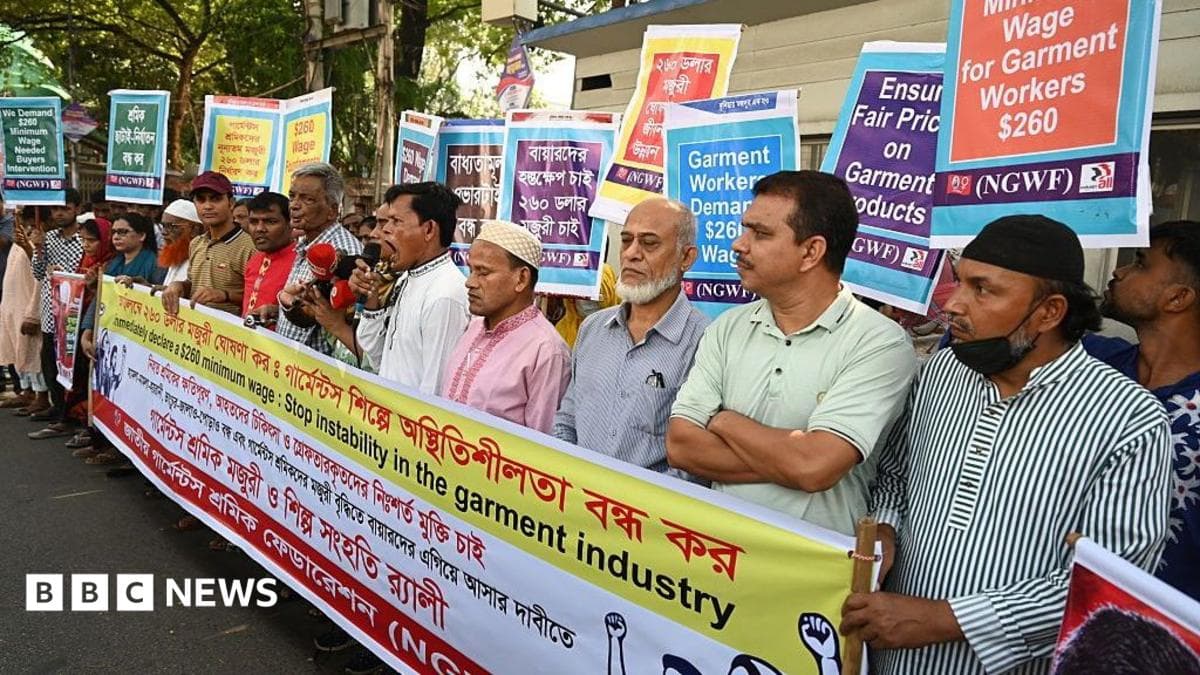
Dozens of factories in Bangladesh's main clothes-producing area have been shut by workers striking over a higher minimum wage.
Nearly 150 sites across the country have been closed in the textile hubs of Savar, Ashulia and Gazipur this weekend.
The garment industry is big business for Bangladesh, generating nearly $40bn (£30bn) in exports every year and making up 10% of the country's total GDP.
Workers are striking over demands for a minimum wage of 30,000 taka (£182) a month. The minimum monthly wage in Bangladesh is currently 12,500 taka but employees say this is not enough to deal with the cost of living crisis.
On Sunday morning workers massed on the Dhaka-Tangail highway in Gazipur to block the road. Traffic was stopped by the protests for about an hour before police stepped in.
A "No Work No Pay" provision of labour laws allows owners to suspend operations and withhold wages when production is disrupted.
Police Supt Mohammad Amjad Hossain told the BBC officers shut factories in the city after the workers walked out.
He said 13 factories were closed on Saturday night and "sixteen factories were closed during the morning unrest".
Wage protests force hundreds of Bangladesh garment factories to close
The garment industry in Bangladesh employs about four million workers making clothes for big brands including H&M, Primark and Zara.
Bangladesh is the world's second largest exporter of ready- to-wear clothes after China and it is feared that the current unrest could have a knock-on effect for international buyers if it carries on for substantial amount of time.
The Bangladesh Garment Manufacturers and Exporters Association (BGMEA) and the Bangladesh Knitwear Manufacturers and Exporters Association (BKMEA) is calling for protection for factories.
"BGMEA and BKMEA have questioned the justification of continuing to participate in wage board negotiations without any assurance that the factories will be protected," BGMEA President Mahmud Hasan Khan said.
"Garment factories that have been unable to continue production due to the ongoing unrest will remain indefinitely closed from tomorrow under... Bangladesh's labour law."
On 1 November the government formed a minimum wage board to recommend a revised pay structure for workers.
The board, chaired by a senior district judge, said at its first meeting it would finalise any recommendations by the end of November.
Once it is put in place, the revised pay structure is expected to take effect from 1 December.