US loses measles elimination status after 26 years amid record case numbers
States have reported over 5,400 cases and 10 measles-related deaths for the first time since the early 1990s.
Noticia publicada originalmente por BBC News — World en bbc.co.uk (se abre en una pestaña nueva). Minuto 24 no es autor de este contenido.
Claves de la noticia
- La OPS, organismo especializado de Naciones Unidas, determinó que Estados Unidos perdió su estatus de eliminación del sarampión tras más de 12 meses de transmisión ininterrumpida de la misma cepa.
- Según el artículo, Estados Unidos registra este año unos 5.400 casos de sarampión y 10 muertes, la cifra más alta desde los años noventa.
- El director de la OPS, Jarbas Barbosa, anunció que México y Bolivia también perdieron ese estatus y atribuyó el resurgimiento a brechas persistentes en la vacunación.
- Los Centros para el Control de Enfermedades de EE. UU. afirmaron que buscarán recuperar el estatus ampliando el acceso a las vacunas, mientras su directora, Erica Schwartz, recalcó que la vacunación es lo que protege a la población.
- La cobertura de la vacuna triple vírica en EE. UU. ha bajado al 92,4%, por debajo del 95% necesario para la inmunidad de grupo, y un brote en Pensilvania ha infectado a más de 1.400 personas.
Contexto
La eliminación del sarampión implica que una enfermedad deja de transmitirse de forma continua en una región durante un periodo prolongado, algo que se considera un logro de la salud pública. El sarampión es muy contagioso y puede causar complicaciones graves, por lo que la vacunación con dos dosis de la triple vírica es la principal herramienta de prevención. El estatus lo otorga la Organización Panamericana de la Salud, que supervisa la región de las Américas. La pérdida afecta también a México, Bolivia y Canadá, además de varios países europeos, lo que muestra un repunte más amplio. En Estados Unidos, el debate se centra en la confianza en las vacunas y en las declaraciones de las autoridades federales sobre la seguridad de la triple vírica, un asunto que influye directamente en las tasas de vacunación.
Resumen elaborado por Minuto 24 con ayuda de inteligencia artificial a partir de la noticia publicada por BBC News — World. Puede contener imprecisiones: ante cualquier duda, consulta la fuente original.
Published17 November 2026, 16:07 GMT
After more than two decades, the US has lost its measles-free status, following two years of record case numbers and deaths.
The Pan American Health Organization (PAHO), a specialised service of the United Nations, determined the US has had uninterrupted transmission of the same strain of measles for more than 12 months.
Dr Jarbas Barbosa, director of PAHO, announced that Mexico and Bolivia have also lost their measles elimination status, attributing the resurgence in the region to persistent "gaps in vaccination".
The US Centers for Disease Control and Prevention (CDC) said it was committed to "regaining measles elimination status" by expanding access to vaccines.
The US has seen 5,400 cases of measles this year alone, with 10 measles-related deaths, the most the country has seen since the 1990s.
The measles virus - with its signature blotchy red rash - used to infect millions of children a year before a vaccine was invented. The extremely contagious virus can be fatal, and some patients can experience long-term complications including encephalitis and immune amnesia, which resets the immune system, leaving it with only limited ability to respond to new infections.
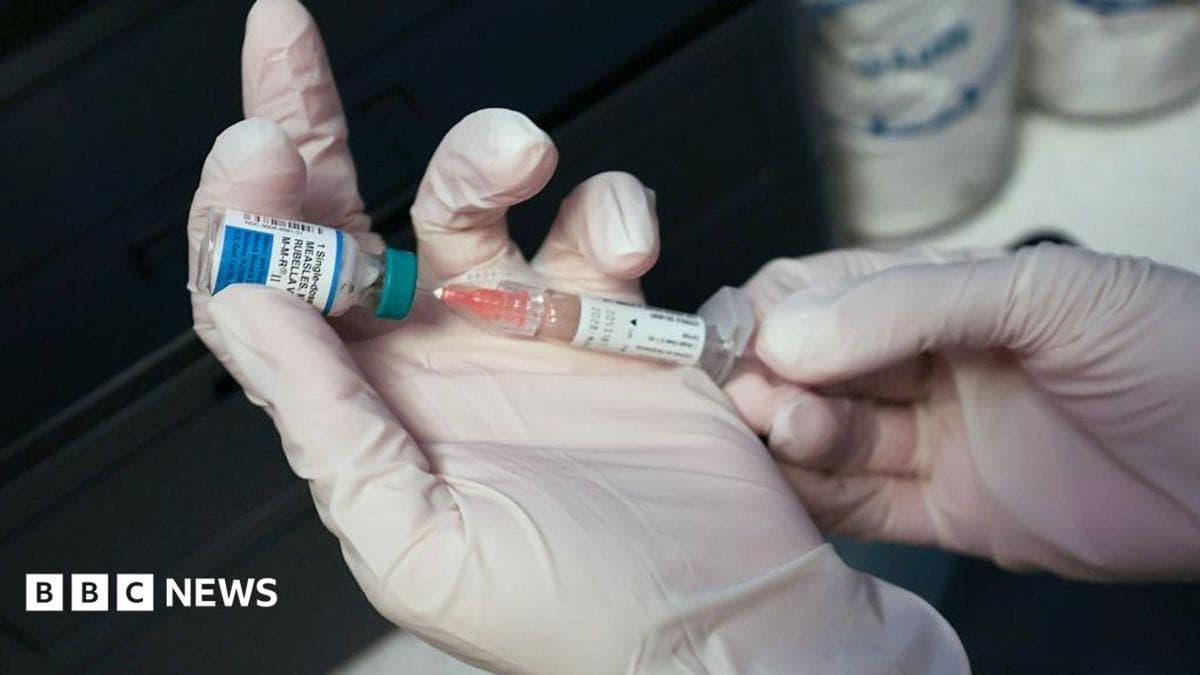
The US recommends two measles, mumps and rubella (MMR) shots for children between ages one and six, which is 97% effective in protecting against the illness.
PAHO, a group within the World Health Organization, revoked the US's measles-elimination after determining that the virus had circulated nonstop for more than a year.
"These figures are a serious warning for our region," PAHO's director Barbosa said at a news conference on Tuesday. "Measles is resurging globally amid persistent gaps in vaccination."
He added that Canada, which lost its status of having eliminated measles last year after seeing several large outbreaks, has made strides this year to interrupt transmission.
Daniel Salas, the executive manager of immunisations at PAHO, said that the US and others who lost elimination status would be required to submit corrective action plans outlining how they would attempt to improve vaccination rates.
US Health Secretary Robert F Kennedy Jr Kennedy has attempted to make a series of sweeping changes to US vaccine recommendations and policies. The vaccine sceptic has also frequently cast doubt on the safety of MMR shot, as vaccination rates have declined across the US in recent years.
Kennedy has argued that the rise in measles cases started before he took the helm at HHS and that neighbouring countries have also seen more infections.
Responding to Tuesday's announcement, the CDC said the agency and its partners were "committed to stopping measles outbreaks, protecting Americans, and regaining measles elimination status".
"Together, we will encourage MMR vaccination, expand access to vaccines, and help communities close gaps in protection," the agency said.
CDC Director Erica Schwartz said the measles elimination designation was not what protected Americans.
"Vaccination does," she said. "We know where transmission is occurring and we've invested $100 million in state and local health departments to reach those communities."
The UK, Spain and Austria were among European nations that lost their measles-free status earlier this year, along with countries including Russia, Azerbaijan and Uzbekistan.
Nuwan Gunawardhana, an assistant professor of medicine with Columbia University Irving Medical Center, said the US losing its elimination status was "a huge leap backwards".
The US was the first country to eliminate measles in the Americas thanks to vaccination campaigns, noted William Moss, a paediatric infectious disease specialist at the Johns Hopkins Bloomberg School of Public Health.
Dr Gunawardhana said it took massive efforts from public health officials and clinicians to build trust with patients to increase uptake of the MMR vaccine, leading to decades in the US with few infections and deaths.
But that trust has been steadily eroding since the Covid-19 pandemic, when Dr Gunawardhana said patients were confronted with misinformation about the safety of vaccines and lost even more trust in public health systems.
The vaccination rate for MMR across the US has fallen to 92.4%, below the 95% level that provides herd immunity, which limits the spread of measles and protects those who cannot get vaccinated, including newborns.
An outbreak in Pennsylvania has infected over 1,400 people - likely a large underestimate - and killed seven people, according to state officials.
Kennedy, the health secretary, has sparred with Pennsylvania officials over how it is counting the measles deaths, with CDC declining for now to record some of the deaths in its database.
Last year, the health secretary fired all the members of a top vaccine advisory panel and replaced them with his own appointees, some of whom were vaccine critics.
The panel recommended a number of vaccine changes - including no longer requiring the Hepatitis B vaccine for all newborns - but those recommendations were blocked by a federal judge.
President Donald Trump this year also cast doubt on the safety of the MMR vaccine, issuing an executive order for the shot to be split into three separate immunisations for measles, mumps and rubella, a move public health experts say is costly and could sow confusion about an already safe vaccine.
Doctors and public health officials say the misinformation from Kennedy and Trump has played a major role in falling vaccination rates.
"It's confusing patients. It's confusing families," Dr Gunawardhana said. "We need a clear message from the top."
The federal government's vaccine manoeuvres have left public health officials and states to fill in the gaps, offering their own separate recommendations upholding decades-long practices.