Top U.N. court rules Myanmar committed genocide against the Rohingya
The International Court of Justice found that Myanmar security forces "acted with genocidal intent" against the Rohingya during the 2017 military operations in the northern Rakhine State.
Noticia publicada originalmente por NPR — News en npr.org (se abre en una pestaña nueva). Minuto 24 no es autor de este contenido.
Claves de la noticia
- La Corte Internacional de Justicia (CIJ), máximo tribunal de la ONU, determinó que Myanmar es responsable de genocidio contra los rohingya durante las operaciones militares de 2017 en el estado de Rakhine del norte.
- El juez Yuji Iwasawa afirmó que la magnitud y la naturaleza de las acciones militares superaron lo necesario para castigar a la población, y las calificó como propias de una intención de destruir a una parte sustancial del grupo.
- Según el tribunal, las fuerzas de seguridad de Myanmar actuaron con intención genocida, y los jueces calcularon que unos 815.000 rohingya vivían en la zona antes de las operaciones.
- Los jueces concluyeron que alrededor de 10.000 personas fueron asesinadas con violencia durante la campaña de 2017.
- Las operaciones estuvieron precedidas por un clima de discurso de odio contra los rohingya, a quienes se presentó como "subhumanos" y como una "amenaza violenta".
Contexto
La Corte Internacional de Justicia es el principal tribunal de la Organización de las Naciones Unidas y resuelve disputas entre Estados, por lo que su fallo tiene peso jurídico y político. Los rohingya son una minoría musulmana de Myanmar que vive sobre todo en el estado de Rakhine, en el oeste del país, y muchos de ellos se refugiaron en Bangladesh tras la violencia de 2017. El caso fue presentado por Gambia contra Myanmar, y en él intervinieron otros once Estados. La noticia es relevante porque es una determinación judicial internacional sobre uno de los episodios de violencia contra una minoría más discutidos de las últimas décadas. La información aún está en desarrollo, según indica la fuente original, por lo que el contenido podría ampliarse.
Resumen elaborado por Minuto 24 con ayuda de inteligencia artificial a partir de la noticia publicada por NPR — News. Puede contener imprecisiones: ante cualquier duda, consulta la fuente original.

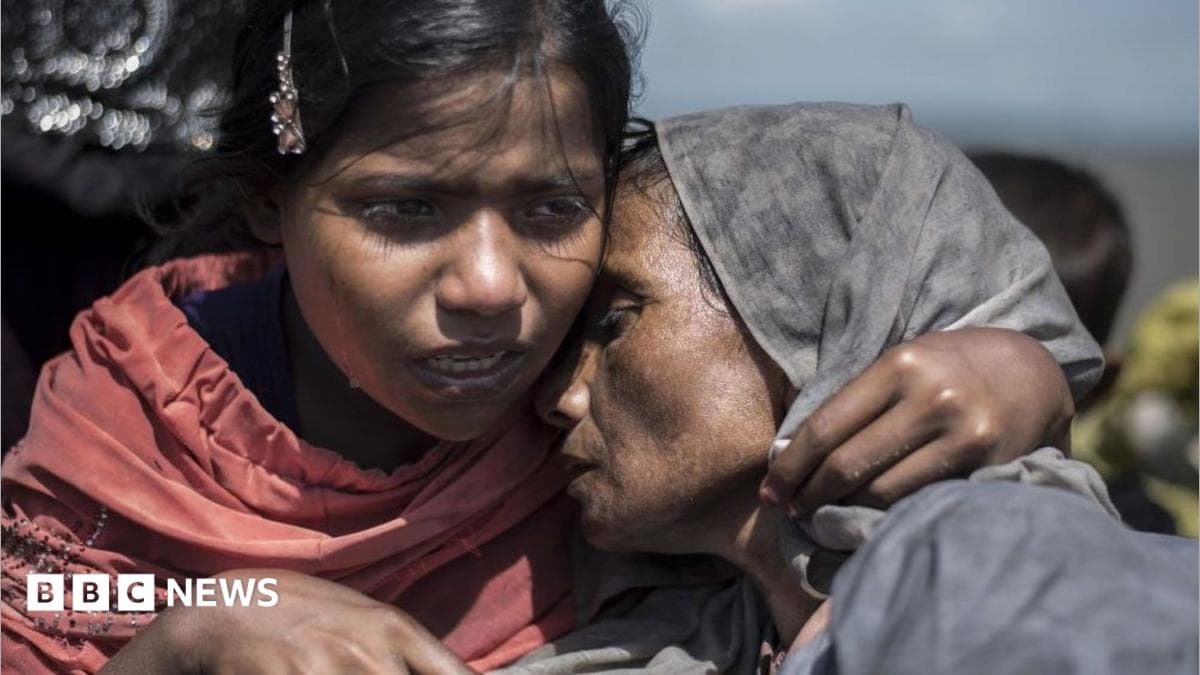
Rohingya refugees watch the International Court of Justice ruling over whether Myanmar committed genocide against Rohingya Muslims, on a screen at a camp in Bangladesh's Cox's Bazar on Nov. 19. Salahuddin Ahmed/AFP via Getty Images hide caption
The International Court of Justice (ICJ) has found Myanmar responsible for genocide against the Rohingya during its 2017 military operations in northern Rakhine State.
Delivering the judgment, Judge Yuji Iwasawa said the scale and nature of the military's actions went "well beyond what would be required to punish the population" and were instead "characteristic of an intent to destroy a substantial part of the group."
This photograph shows a general view of judges of the International Court of Justice (ICJ) attending a public hearing ahead of the reading of the Court's judgment in the genocide case brought by Gambia against Myanmar, with 11 States intervening, in The Hague on November 19, 2026. JEROEN JUMELET/ANP/AFP via Getty Images hide caption
The judges estimated that around 815,000 Rohingya lived in northern Rakhine State before the operations, and concluded that around 10,000 were violently killed during the 2017 clearance campaign.
Rohingya refugees watch the International Court of Justice (ICJ) ruling over whether Myanmar committed genocide against Rohingya Muslims, on a screen at a camp in Bangladesh's Cox's Bazar on November 19, 2026. SALAHUDDIN AHMED/AFP via Getty Images hide caption
The court found that Myanmar's security forces "acted with genocidal intent." Judge Iwasawa said the operations were preceded by an atmosphere of anti-Rohingya hate speech, with the community portrayed as "sub-human" and "a violent threat."
This is a developing story that will be updated.
NPR does not offer or accept money for coverage or interviews. Anyone who makes such an offer or request is not an NPR employee and does not represent NPR.